Today I want to talk to you about the famous Netatmo Weather Station. I’ve been using it for a while now since it was sent to me for testing by Villarrazo, a company that handles Netatmo’s PR in Spain, and over these months I’ve compared it with Apple’s Weather service and the Carrot Weather app. Let me share my conclusions with you.
The Netatmo Weather Station
I imagine most of you have heard of the Netatmo Weather Station at some point. It’s the typical device that everyone who’s tried it recommends to you. It’s not new and it’s not particularly cheap, since its usual price hovers around 110 or 120 euros, though it tends to drop quite a bit during Amazon Prime Days, Black Friday and the like—it’s usually one of the products I always include in my recommendations roundup for those events.
It also comes with the Netatmo name behind it, and as you know, that’s one of the Premium brands in home automation compatible with HomeKit, and they’ve been on the market for many years now. I use the Netatmo thermostat for my boiler, I have all the radiators in my house automated with Netatmo’s smart valves that talk to the thermostat, I’ve also tried their cameras… and I’ve recommended the Netatmo smart doorbell many times during home automation consultations for people living in a house or townhouse. Netatmo belongs to the Legrand group, a long-established French company that makes electrical materials and components. I started using Netatmo products many years ago, back when they, Eve, Aqara… and not much else were on the market. Now there are tons of brands at reasonable prices, but I have to tell you that the Netatmo products I own have never let me down, so I’m going to keep recommending them.
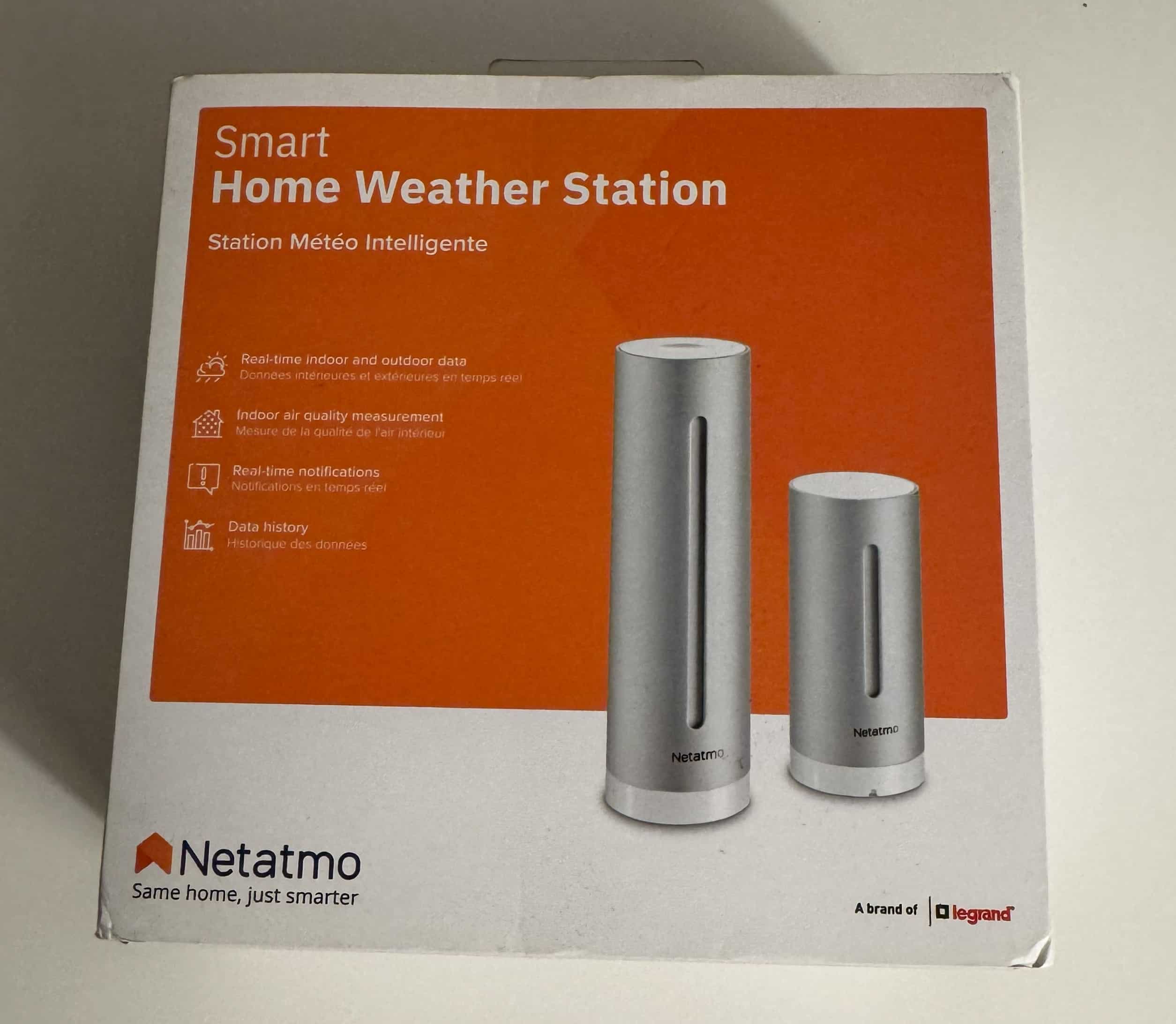
Estación Meteorológica de Netatmo
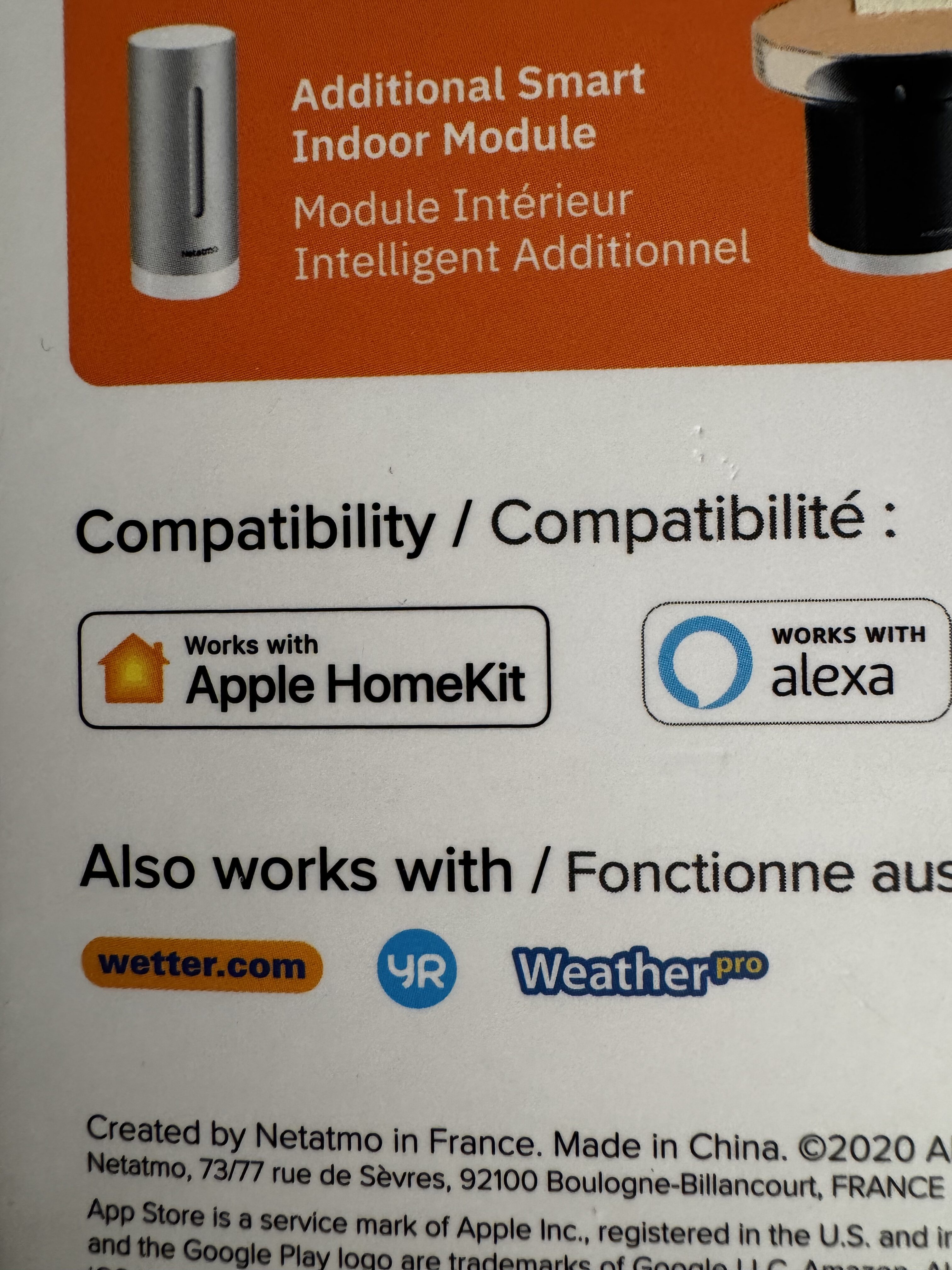
Compatibilidad con HomeKit de la Estación Meteorológica de Netatmo
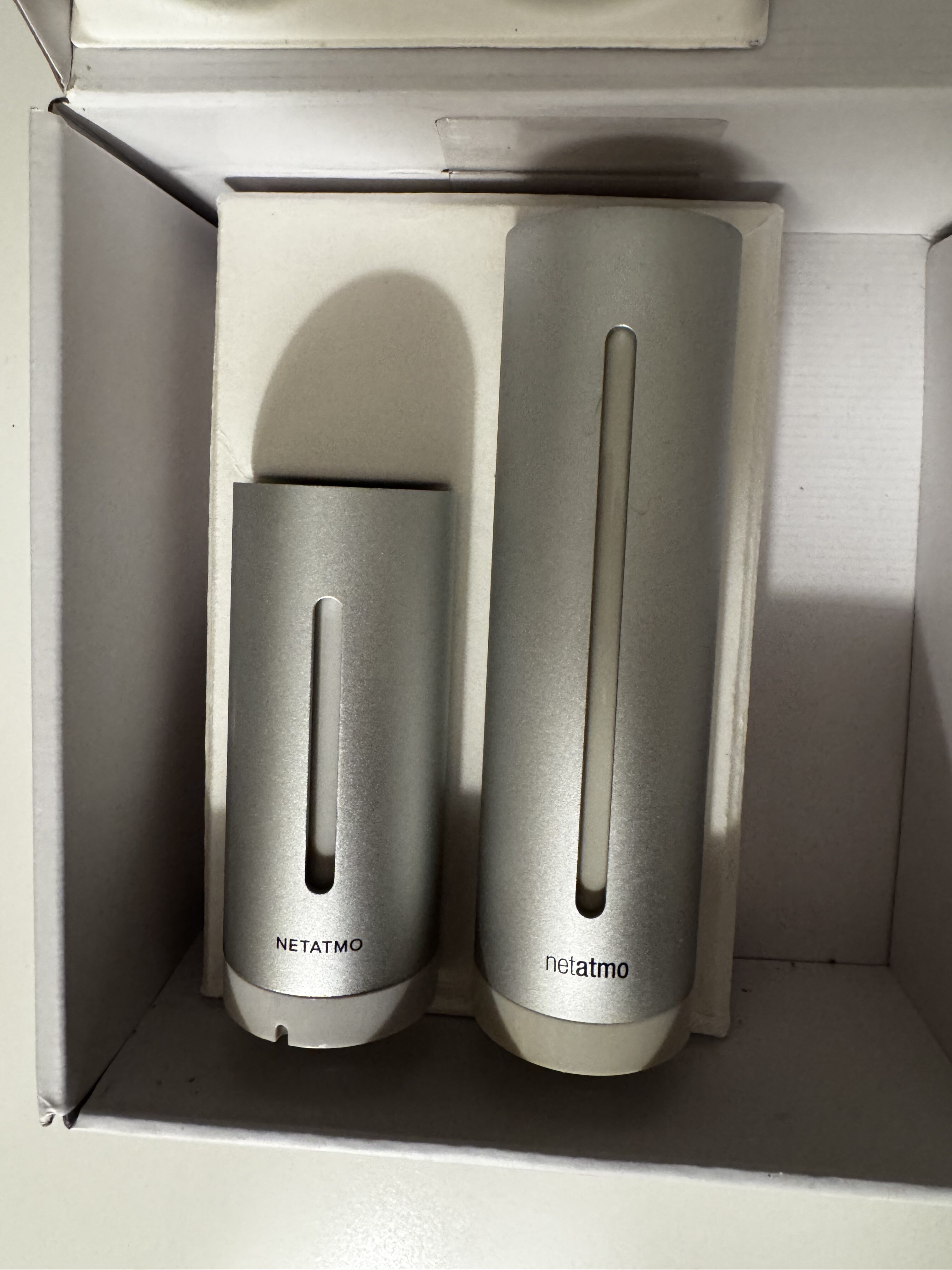
Módulo exterior para la Estación Meteorológica de Netatmo
Anyway, let’s focus on the weather station. Basically it consists of 2 modules in its starter pack: the station itself, which is the cylindrical-shaped part that stays inside your house and acts as a bridge between the different components, and the outdoor module. It’s not really a bridge in the strict sense since it doesn’t use known technologies like zigbee or z-wave to connect with Netatmo’s various devices, but it does act as a hub. The outdoor module connects to this thingy, runs on batteries, and you can place it wherever you like outside the house, exposed to the elements.
Needless to say, for this outdoor module you can find all sorts of mounts and covers on Amazon, since placing it on a shaded wall is not the same as having it sit in direct sunlight all day, which can give you an outdoor temperature reading that’s not accurate. I ended up putting mine on the balcony, above the little light fixture, since it’s always shaded there thanks to the balcony roof covering it.
Besides this module from the starter kit, you can buy a rain gauge to detect rainfall and tell you how many liters are falling per square meter, and an anemometer that measures wind speed, gusts, etc. So basically you can build a fairly complete weather station and place several sensors in different spots on your house’s facade, for example.
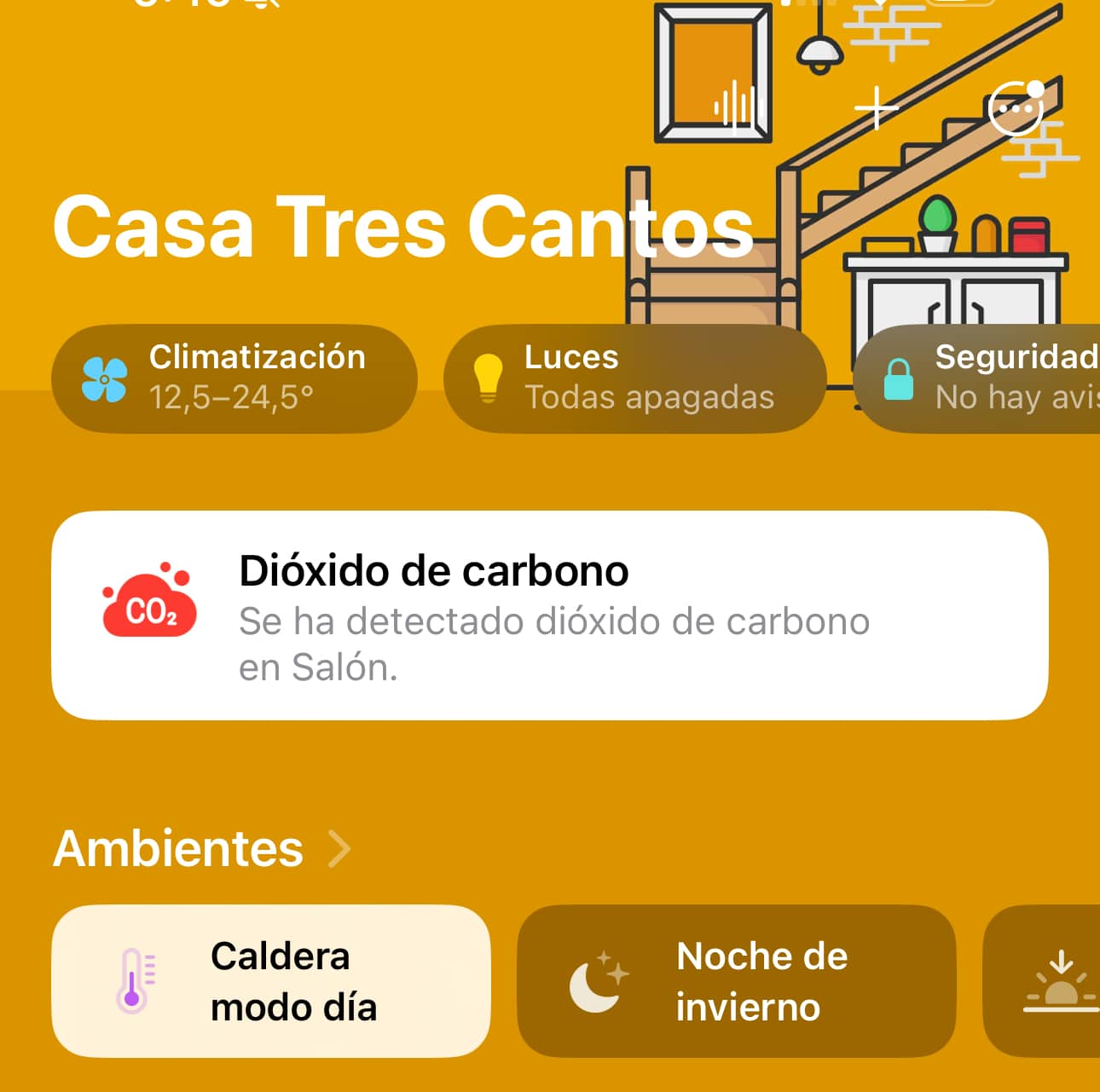
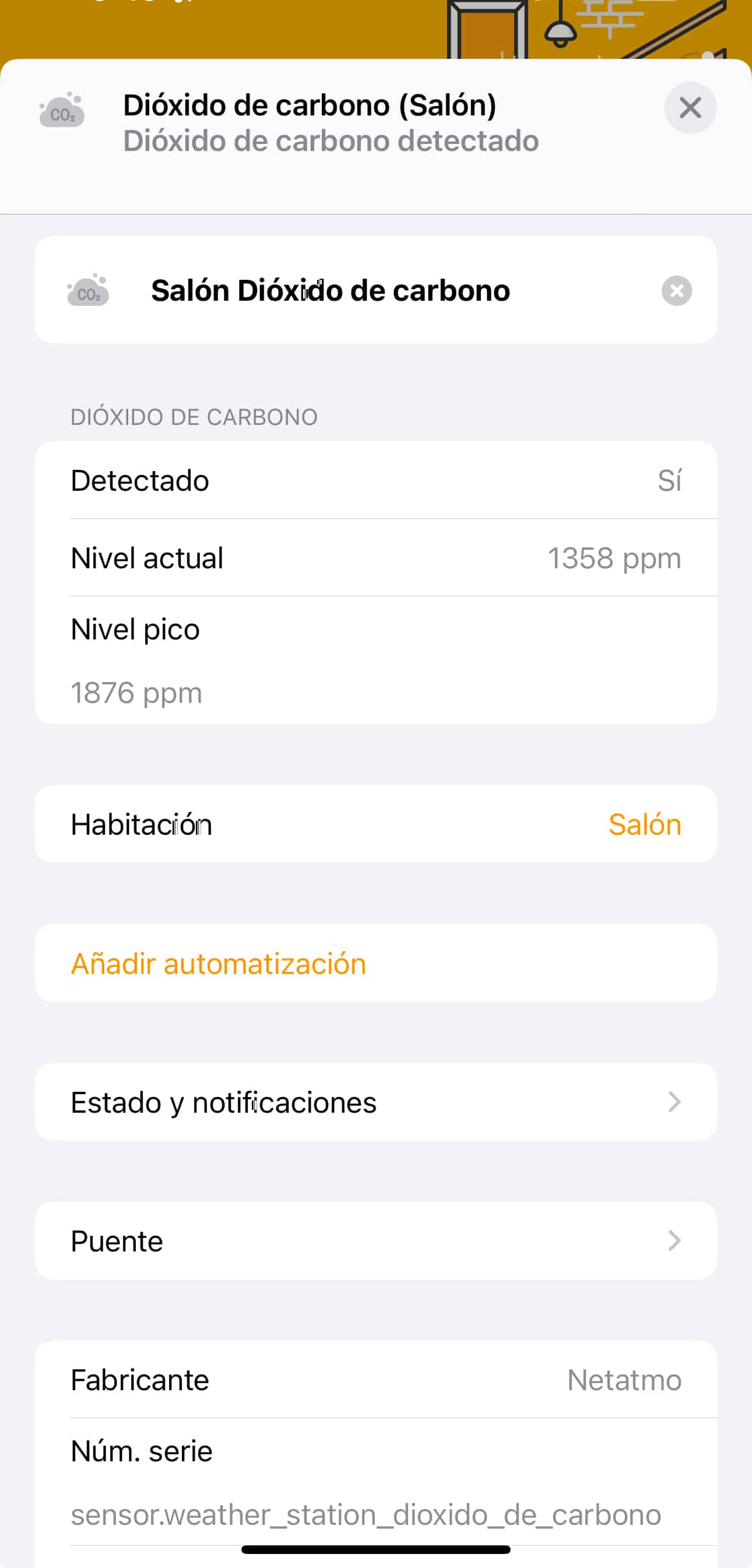
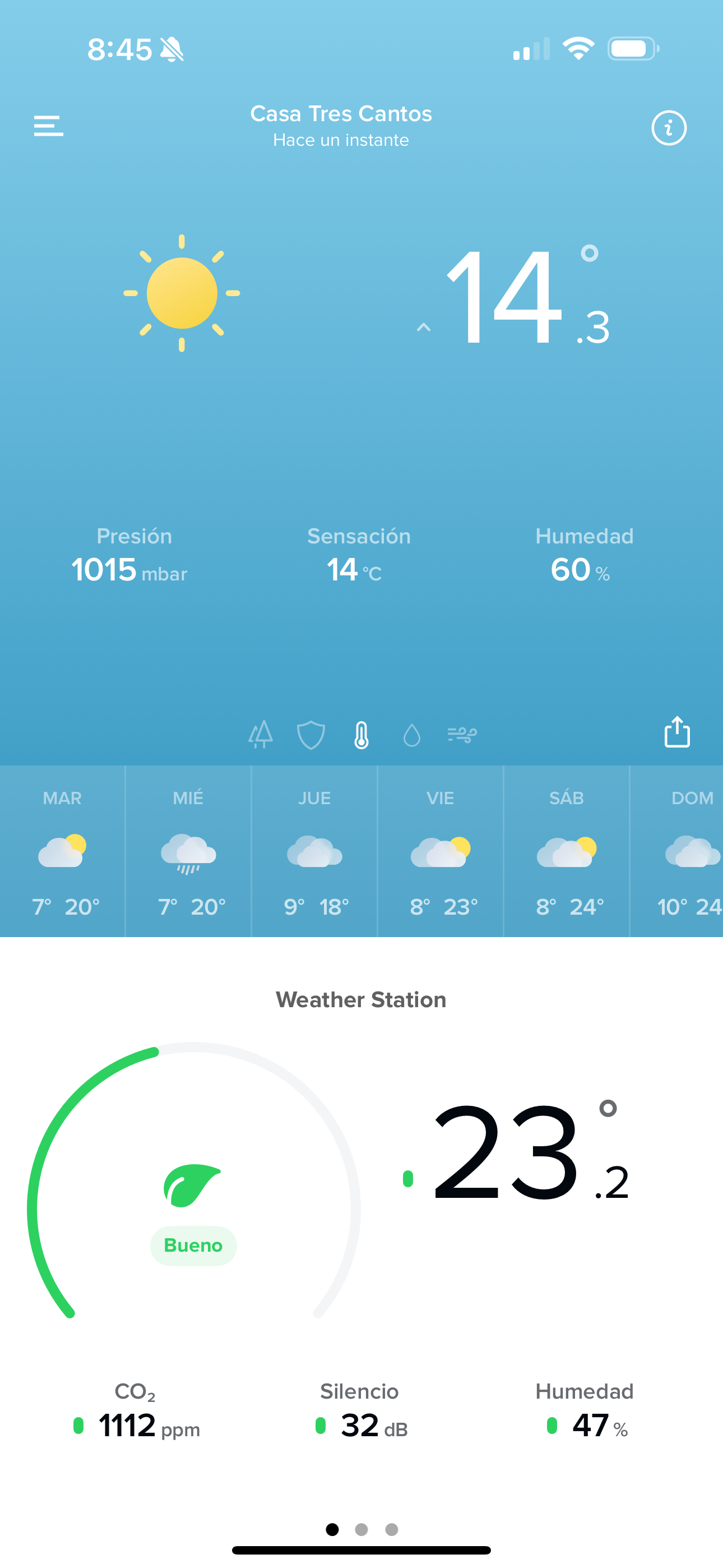
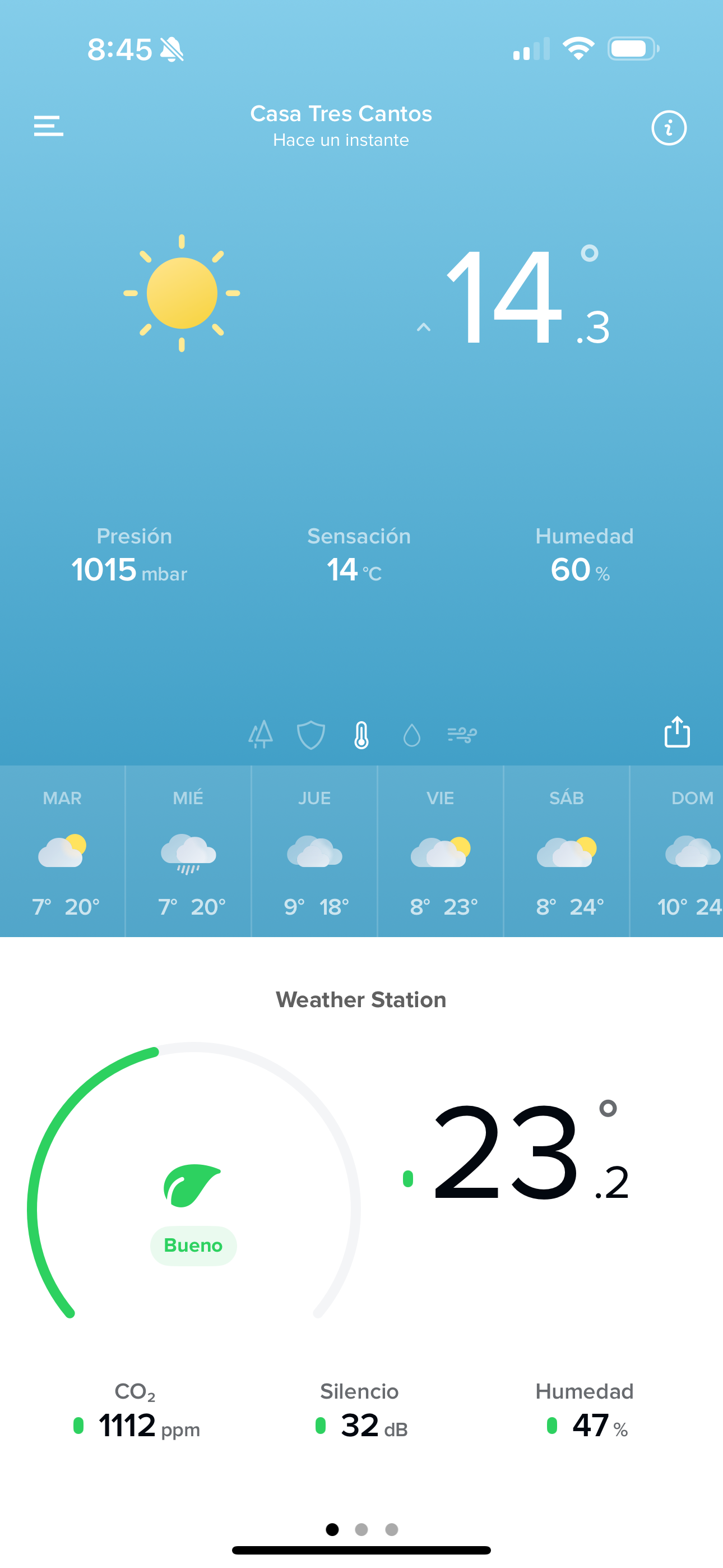
The hub I mentioned earlier that stays inside your home is also measuring your indoor air quality, so it can give you precise CO2 readings (now, this data point is quite interesting—supposedly when CO2 spikes it’s because the air in your home has gotten a bit stale and you should air it out… but you can’t imagine how annoying it gets in HomeKit with notifications every few minutes…). It also tells us the temperature of the room where you have it, noise levels, and you can buy different modules to deploy in your rooms so they give you all that data for every room in the house… and all of it perfectly integrated with HomeKit or with its own app, which doubles as a Weather app where you can see the current conditions both inside and outside your home, the forecast for the coming days, and all that.
It’s worth noting that all that data stays local, it’s not sent anywhere… unless you want it to, since there’s a collaborative network called WeatherMap where you can upload your station’s data and check in real time the data being uploaded by weather stations all over the world. That way you get the temperature for an area based on real data from people who own the same station as you, not from satellites or generic stations 30 kilometers from your house. I don’t know, I really like the idea, plus if there are several stations very close together in the same area, it’s able to show you the average and discard any that are giving off odd readings for whatever reason.
Weather Station Integration
As for integration, of course it works with Apple’s HomeKit, with its own QR code as always, which you scan directly from the Home app. It also has an official Netatmo integration for Home Assistant—you don’t need to expose it in Home Assistant using the HomeKit bridge—it also integrates with IFTTT, and you can build automations from there so it notifies you via WhatsApp, for example, if it’s going to rain (I’ve already talked about IFTTT and WhatsApp integrations on other occasions)… and it also has its own open, documented API in case you want to pull the data from an app or system you’ve built yourself.
Detección de CO2 en el Salón a través de la Estación Meteorológica de Netatmo
Indicador de CO2 en el Salón a través de la Estación Meteorológica de Netatmo
But anyway, the million-dollar question with this type of device is whether it gets it right—that is, whether with all this data and the bunch of sensors it packs, it gives us an accurate temperature and humidity forecast, because any smartphone nowadays can already do that.
So… is it reliable?
The short answer is: yes, pretty much. After all, it’s measuring what’s actually happening at your house, not what a weather model predicts or what a station far from your house is reading. But to get a better look at this, I’ve been testing the Netatmo station alongside the Carrot Weather app and Apple’s native Weather app.
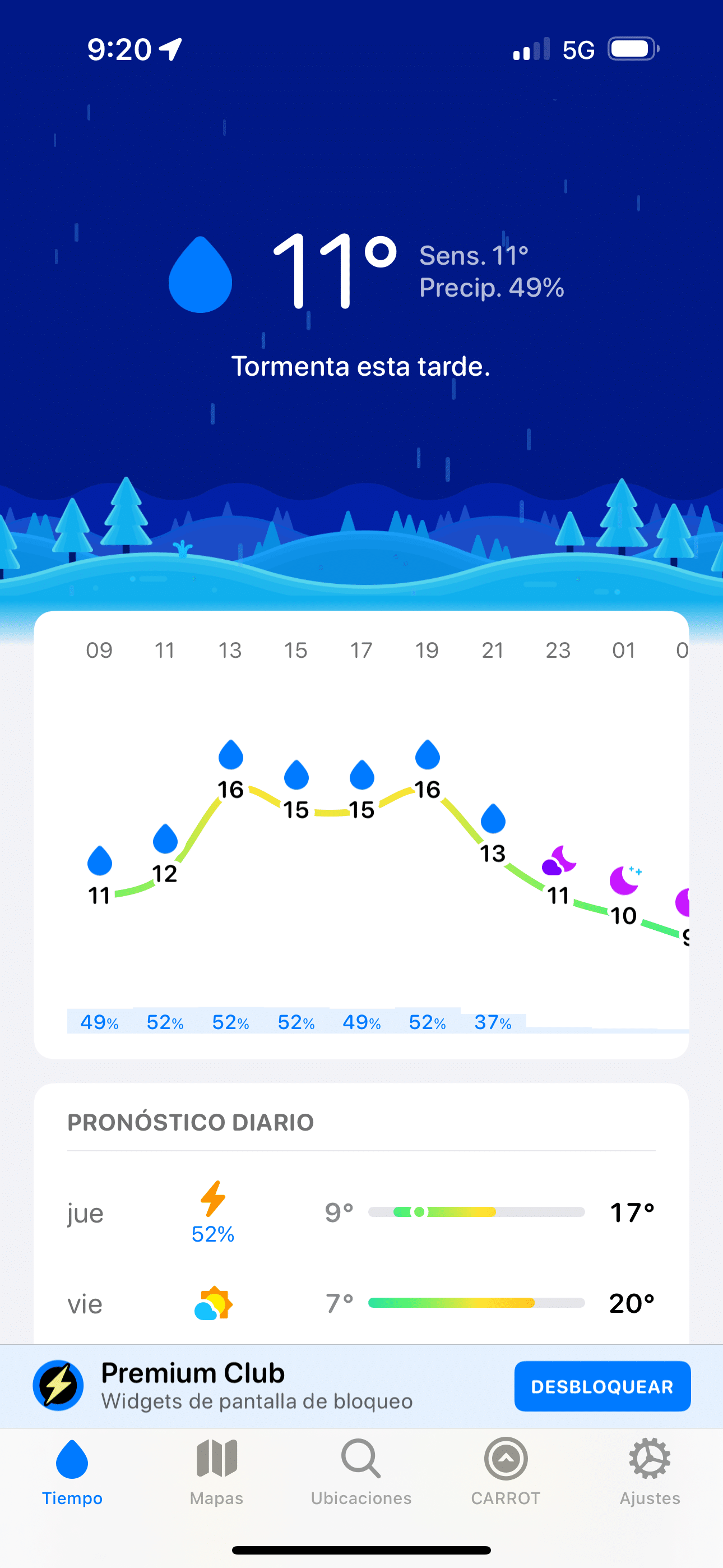
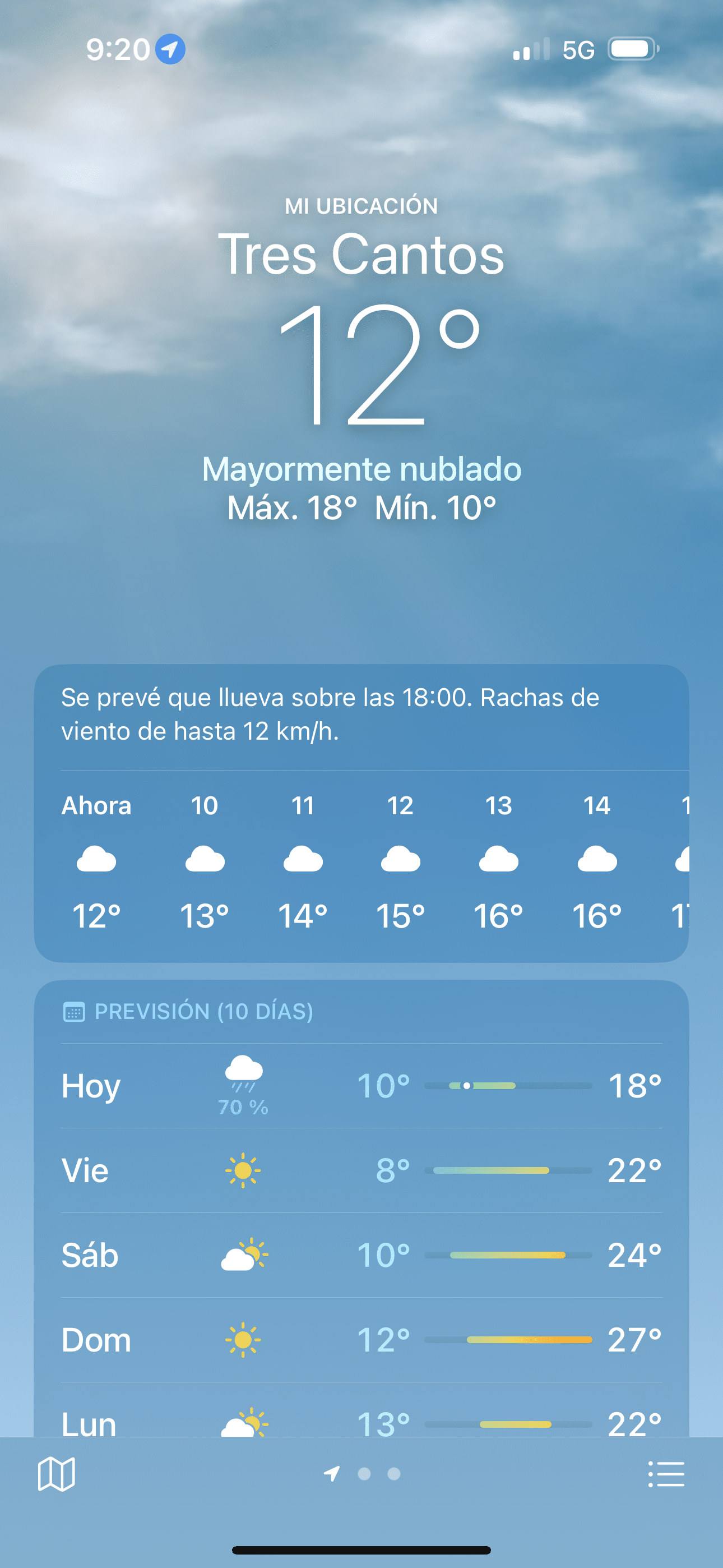
I don’t know if you’re familiar with Carrot Weather, but you can configure it with a bunch of different data sources to get the weather for your area. You can’t do this in Apple’s Weather app—in fact, if you go into Learn More within the app, it takes you to an Apple support page that tells you which data sources it consults by country, and in Spain it’s based solely on AEMET and The Weather Channel. In Carrot you can tell it to use global services like Foreca, AccuWeather, OpenWeather, etc., as well as Apple Weather’s service. There’s a neat feature: you can tell Carrot Weather to pull data from your Netatmo weather station, which can be interesting because Carrot has widgets for the iPhone and Apple Watch, something Netatmo lacks, so you can carry Carrot on your watch, and when you tap to check the weather, it’s actually showing you the real temperature at your house pulled from your Netatmo station… and this would be great if the Netatmo station gave an accurate temperature reading, which is what’s bugged me most about all this… it doesn’t tell me the outdoor temperature correctly.
I’ve run thousands of tests over these months, checking at the same time the Netatmo app, the Home app to see the info the station was providing, Apple’s Weather app, and Carrot Weather… and the outdoor temperature the station reports is usually somewhat higher than what the other apps say. But higher to an absurd degree—5 or 6 degrees more on some occasions. There I was, freezing my butt off outside in short sleeves at 13 degrees because the Netatmo station told me it was 19, while Apple’s app and Carrot, using different data sources, both agreed it was 13 degrees and that I should put on a jacket.
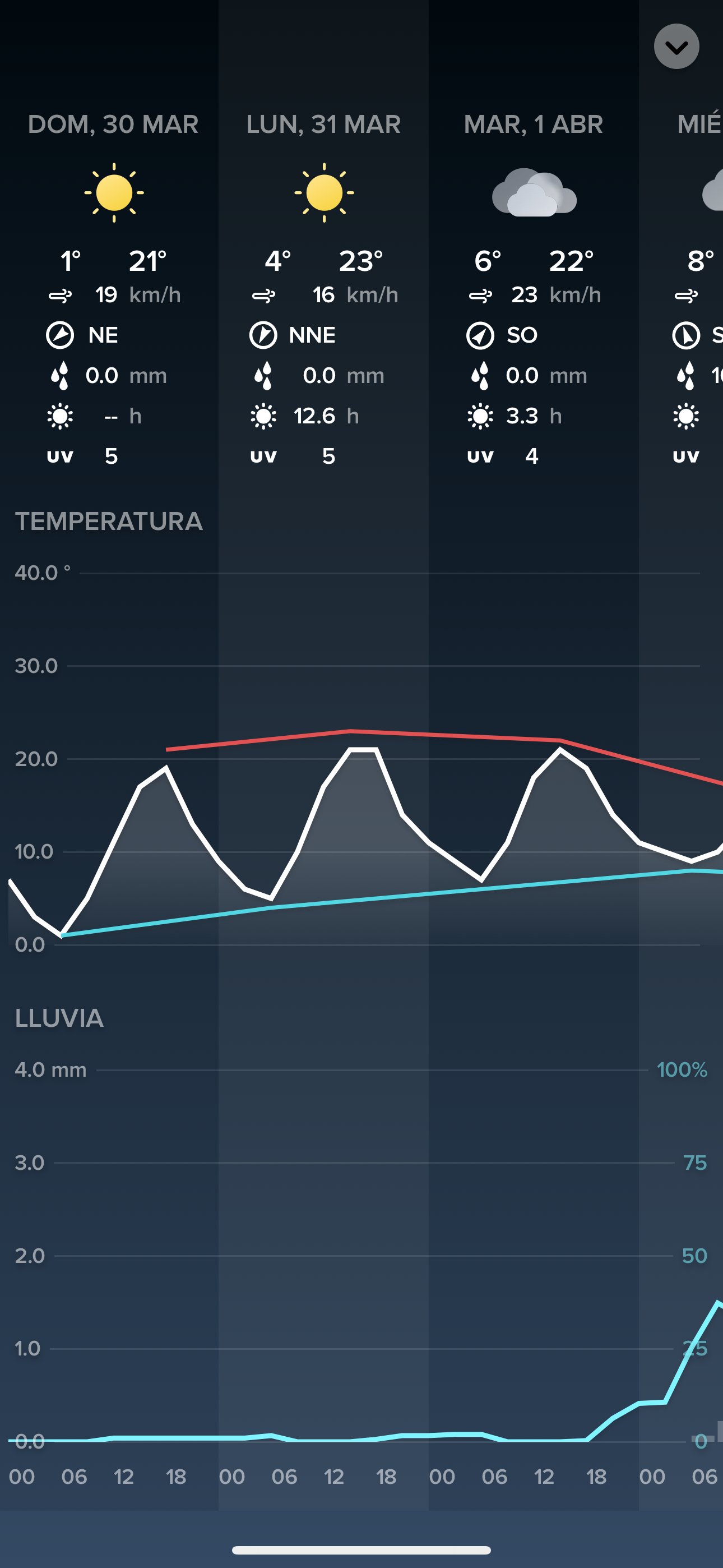
Previsión de lluvia en Carrot Weather
No se prevé lluvia en la app Tiempo de Apple
I’ve tried moving the sensor around—I’ve had it on the balcony floor, on one of the outdoor windowsills, on the railing… and finally above the light fixture, which is where I have it now so it never gets any sun, and most of the time it tells me a higher temperature than what the other 2 apps are showing, or than a small mercury thermometer I have at home that’s older than I am.
However, the rest of the data is super reliable. If it says it’s going to rain in a bit, it’ll rain. I don’t know what kind of garbage system they use in Formula 1 where they tell you «No rain expected in the next 4 minutes» and then while it’s raining mid-race they say «it’ll keep raining for 8 more minutes»… damn, and they nail it down to the second, man. The Netatmo station doesn’t work quite like that, but if it says it’s going to rain at 6 in the evening, don’t leave the house at 5:30 without an umbrella because you’re definitely getting wet. Maybe it’s not exactly at 6 ON THE DOT, but before 7 it’s going to rain.
Just yesterday morning I was talking with Martín Guiroy from the Mini podcast, who also owns a Netatmo weather station… but of course, Martín lives in Donosti, where you can’t gamble with the weather because in winter it’s going to rain on you no matter what, and we both agreed on how optimistic the Netatmo station’s temperature readings are and on how well it predicts rain. In fact, while I was talking with Martín it started raining here in Tres Cantos, and both the Netatmo app and Carrot Weather said it was already raining… but Apple’s app said it would be cloudy with sunny spells all day. Not a single sunny spell all day, man.
Calidad del aire buena después de ventilar en la Estación Meteorológica de Netatmo
Pronóstico del tiempo en la Estación Meteorológica de Netatmo
Look, at the end of the day the Netatmo weather station measures what’s happening at your house, as we said before. You can see how the humidity changes when you open a window, whether the air quality worsens from cooking without an extractor fan, or if it’s raining on your street but not on the other side of the city. It does all of that brilliantly. If all you want to know is whether it’s going to rain tomorrow so you can go for a run, you don’t need to buy the Netatmo station, which at 120 € is a bit pricey—both the AEMET app and your smartwatch will tell you that with no problem and a pretty high accuracy rate, especially if you use Carrot Weather with the Foreca data source, which works best in my area, although that involves a 35€/year subscription… and it kind of bugs me to pay for apps that do something similar to Apple’s native apps. Is it worth paying that 35€ for presumably a better forecast? I can’t even say for sure it’s a better forecast—it’s true that over these months it’s alerted me to rain better than Apple’s Weather app… but maybe that’s just a one-off thing and it handles summer worse than Apple’s app… or it was pure coincidence and they actually both have the same error rate. No idea.
But if you’re interested in having your own historical temperature record over the years, tracking how the climate affects the air inside your home, or if you have a small vegetable garden, solar panels, humidity issues, or a kid with asthma at home… then things change, and the Netatmo station becomes an excellent choice, ahead of other devices, for keeping tabs on your home’s air quality.
And especially if you’re the type who enjoys «owning your own data» instead of relying on external services, since the data is yours, you can analyze it, use it however you like, or export it to collaborative networks if you want to.
¿Necesitas ayuda con tu domótica?
Te ahorro tiempo, dinero y disgustos. Sesiones de consultoría desde 60€.
 Carlos Sahuquillo
·
16 mayo, 2025
·
12 min de lectura
Carlos Sahuquillo
·
16 mayo, 2025
·
12 min de lectura



0 comentarios