What is comfort in home automation?
 Carlos Sahuquillo
·
29 mayo, 2025
·
11 min de lectura
Carlos Sahuquillo
·
29 mayo, 2025
·
11 min de lectura
Ep. 95 · escúchalo
0:00 /
Idioma:CastellanoEnglish
Today I want to talk to you about a thought that occurred to me a few days ago after listening to Emilio Cano’s Weekly podcast, Emilcar, which for anyone who doesn’t know it is a MUST in your podcatcher. Emilio is a great guy who’s been doing podcasts for many years now and whom I follow with fierce devotion, especially when he talks about tech and productivity. It’s true he’s getting on in years now, talking about Android-based e-ink tablets, but hey, even the best scribe smudges the page sometimes, what can you do. Anyway, let me tell you why I think Emilio was wrong about a few things he mentioned last Friday.
First of all, if you’re subscribed to Emilcar’s Weekly and haven’t listened to last Friday’s episode yet, you might want to stop reading here and go listen to it, since I’m going to comment on some of the things Emilio said, but he also said plenty of things I completely agree with, so if you haven’t heard it, I recommend listening right away. And if you can’t listen because you’re not subscribed, I also recommend subscribing right now! Not because I’ll get any commission or referral link out of it or anything like that, but because I think the Weekly is one of the most interesting long-format podcasts we have in our podcatchers for those of us who love tech.
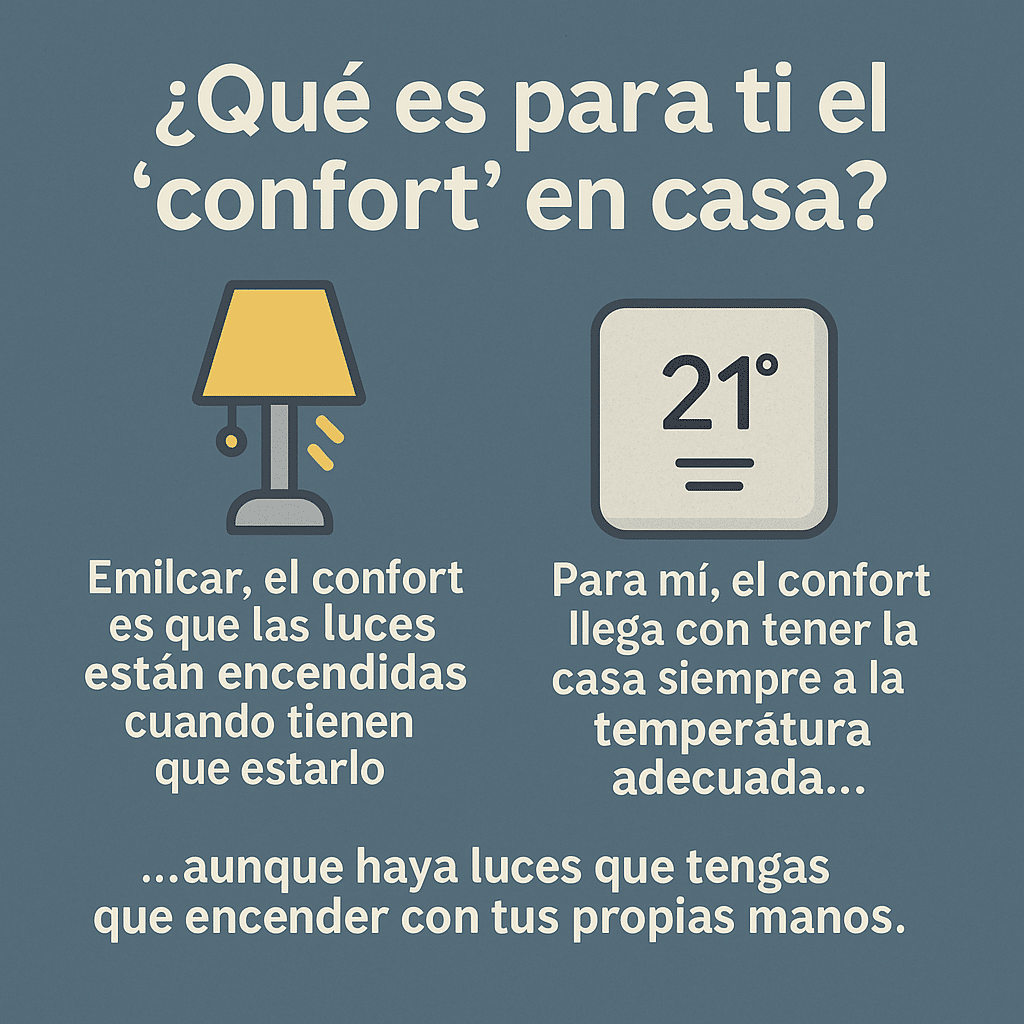
To give you some context, I’ve talked to Emilio several times about home automation, and I’d like to think I’ve given him a hand smartening up his house. There’s an episode somewhere where we talked about smart relays like Shelly and Sonoff, automations, his kids’ little lamps, et c… but man, it kills me because I just can’t seem to get through to him. Doesn’t matter how much automation consulting we do, the guy is still smitten with lights turning on by themselves. Sure, it’s very convenient and it does give a certain homey feeling when you get home after spending the day out with the kids and open the door to find a few lights already on. Plus, you know those lights haven’t been on all day, but were off until your accessory hub detected you were entering the home zone and that it was nighttime, so it turned some lights on so you wouldn’t walk in in the dark. That automation is very simple and can be done from any ecosystem you use, whether it’s Apple’s HomeKit, Home Assistant, Alexa, or Google Home. But the first thing that rubbed me the wrong way is that Emilio said this is the first thing he’d do in a smart home: comfort… and what can I tell you, to me, that’s not what comfort is.
Look, you already know I do all kinds of Home Automation Consulting. There are people who contact me because they’re buying a new home and want to start automating things from scratch, so they need to know what kind of devices to install, whether they need special wiring, whether there’s anything to consider regarding the home’s electrical panel… others are in a similar situation because they’re doing a major renovation on their home… and, of course, plenty of people who want their house to react on its own but don’t know where to start or which gadgets they should buy first. To me that’s the key point, we’ve said it many times, having the house react on its own. If it’s nighttime and someone’s home, the lights should turn on. If it’s nighttime but we’re out for the day, they don’t need to turn on… but if we suddenly head home because we had dinner out but we’re going to sleep there, the house should know and welcome us with some lights on, like we said before, so we don’t walk in in the dark. And yes, that is comfort, but what really marked a before-and-after moment for me in my house was temperature control. If I get home and the lights are on but it’s freezing cold, we all walk in feeling miserable, still wearing our jackets, and the last thing you want is to crawl into a cold bed. But if you get home and it’s nice and warm in winter or pleasantly cool in summer, then if you have to flip a light switch by hand, no big deal, you can take off your gloves to reach the switch.
Turning our boiler or air conditioner into a smart gadget isn’t very complicated either, in fact I think it’s actually simpler than lighting, because when people think about making their home’s lights smart, they usually think of smart bulbs… and nothing could be further from reality! Nowadays it’s much better to install a smart relay in the junction box or behind the switch and trigger the switch remotely so it turns the lights on as if you’d flipped it by hand. Smart bulbs have been relegated to very specific use cases since they always need to stay powered, so if you just swap the bulb in your lamp for a smart one, you’ll be able to automate actions and turn it on/off from your phone or voice assistant… until someone flips the switch and cuts the power, and just like that, the magic’s gone. What’s more, if the bulb was off when someone flips the switch intending to turn it on, it’ll cut the power… but if they flip it again, the bulb will get power but will still be in the «off» state, so that person will flip the switch a few times before finally telling you the bulb’s burned out or not working right. I’ll tell you straight up, these days I barely use smart bulbs for anything. Sure, you can play around with brightness and color… but the color thing is also something you do at first and then abandon. I used to have an automation that turned the bathroom lights on when I walked in first thing in the morning if it was going to rain that day, so I’d know to grab an umbrella… but I ended up disabling it because if it’s going to rain, it’s not exactly a surprise anymore, we’re all more or less up to date on the weather forecast for the coming days in our area. Another time, my wife walked into the living room and I set the lights to red, put on my best seductive face, and said in a very sultry voice, «Hey there, baby… come sit down here»… her response was «Get out of here!» and she sent me packing, so that use case didn’t turn out as expected either.
So, at least in my opinion, it’s much more worthwhile to control the temperature of your home, since that’s what actually determines how comfortable you feel in it. For gas boilers like mine, you can install a relay like the one from Netatmo or Tado, both of which make really good products. Tado also has solutions for underfloor heating, air-source heat pumps, and more… and if you have one of those individual air conditioning units, Tado has a device that learns the frequency of your regular old remote control so it can send the signal to the AC unit and turn it on or off remotely, based on certain conditions or whatever you need. From there, you can go as deep down the rabbit hole as you like: making your radiators smart too, playing with room-by-room temperature, or setting it up so that if your oldest kid isn’t home, that room doesn’t heat up until they’re on their way back… why heat up a room if there’s nobody in it, right?
If you have one of those pricey ducted air conditioning systems, it’s worth checking whether it’s compatible with the AirZone module, developed by some really nice guys from Málaga who turn AC systems smart. You can even install motorized vents in the rooms so they open or close, doing the same thing I mentioned earlier with the kids’ bedroom or, in Emilio’s case, his podcast recording studio.
Hey, you could even try keeping the bedroom at a constant 12 degrees to see if that trick works and gets your partner cuddling up close. The red-lights thing might not work, but this one just might. Trial and error, as always with your partner, what can you do.
Anyway, I’m getting carried away and there’s more I wanted to say! Another thing Emilio mentioned is that he has an automation that turns off all the lights and the Apple TVs at 1 in the morning. That automation is great, but you could take it further and add some clever conditions. In my case, for example, the lights don’t turn off at a set time; instead, when I put my phone on my nightstand to charge at night — because if I do it in the mid-afternoon or at some other time, no automation gets triggered — but if I plug it in at night on my nightstand, which the system recognizes as my nightstand because it has an NFC sticker and is connected to the home wifi, then it turns off all the lights… EXCEPT if the living room TV or the Apple TV is on, since maybe we’re watching TV and my phone is about to die so I plug it in… or my wife and I go to bed but my oldest son is in the living room watching a movie… in those cases, the lights don’t turn off. The unconditional «turn everything off at 1am» automation doesn’t really apply to me, since I myself am not always in bed by 1am.
Anyway folks, what I want to make clear is that the first thing we should do is solve REAL needs. It’s all well and good having the lights turn on by themselves when we get home, but it’s even better having the boiler kick in when the temperature in the rooms drops below X degrees, so before you start buying devices like crazy, you should think about what things you believe could be improved and would actually make your life easier. The smart lock thing Emilio mentioned is also very practical — you tap the key when everyone leaves the house, and you can set it to unlock when you’re standing right at the door… great… but I don’t know if you listen to Patuflinx, Cristian García, who has the podcast AppsMac en 8 minutos, and who told a story about his lock unlocking while he was pulling out of the garage, God knows why. His phone was probably out of coverage inside the garage, and when he drove past under his window, it briefly connected to the wifi, and the lock interpreted that as him standing right at the door — but imagine the scare and the hassle of having to go back up to check whether it’s open or locked. And the worst part of all this is that we get used to convenience so quickly, so if one day we leave the house without keys and it turns out the lock’s battery has died and we can’t easily get in (I recommend having some backup method, the classic fake plant pot with a key inside, or taping one under the doormat like I do)… then, on top of feeling ridiculous, we’ll probably get an earful or have to call a locksmith — and we wouldn’t be the first ones that’s happened to.
¿Necesitas ayuda con tu domótica?
Te ahorro tiempo, dinero y disgustos. Sesiones de consultoría desde 60€.
Carlos Sahuquillo
'Haga lo que haga en la vida, siempre compito' - Jacques Villeneuve Reserva una sesión →
Sigue leyendo
Ver todo el blog
Entradas relacionadas
3 septiembre, 2026 · Domótica
Leer
Webhooks and workflows in Controller for HomeKit
Kicking off Season 4. I'm picking back up the automation for the sensor that kept running out of batteries that I told…
Ep. 111 · escúchalo
0:00 / 13:12
27 agosto, 2026 · Domótica
Leer
How to tell if your kid is sneaking into your room without having a camera
I bought the Aqara P2 presence and light sensor with Matter, and I've got it running simultaneously on HomeKit and Home Assistant…
Ep. 110 · escúchalo
0:00 / 12:16
25 abril, 2026 · Domótica
Leer
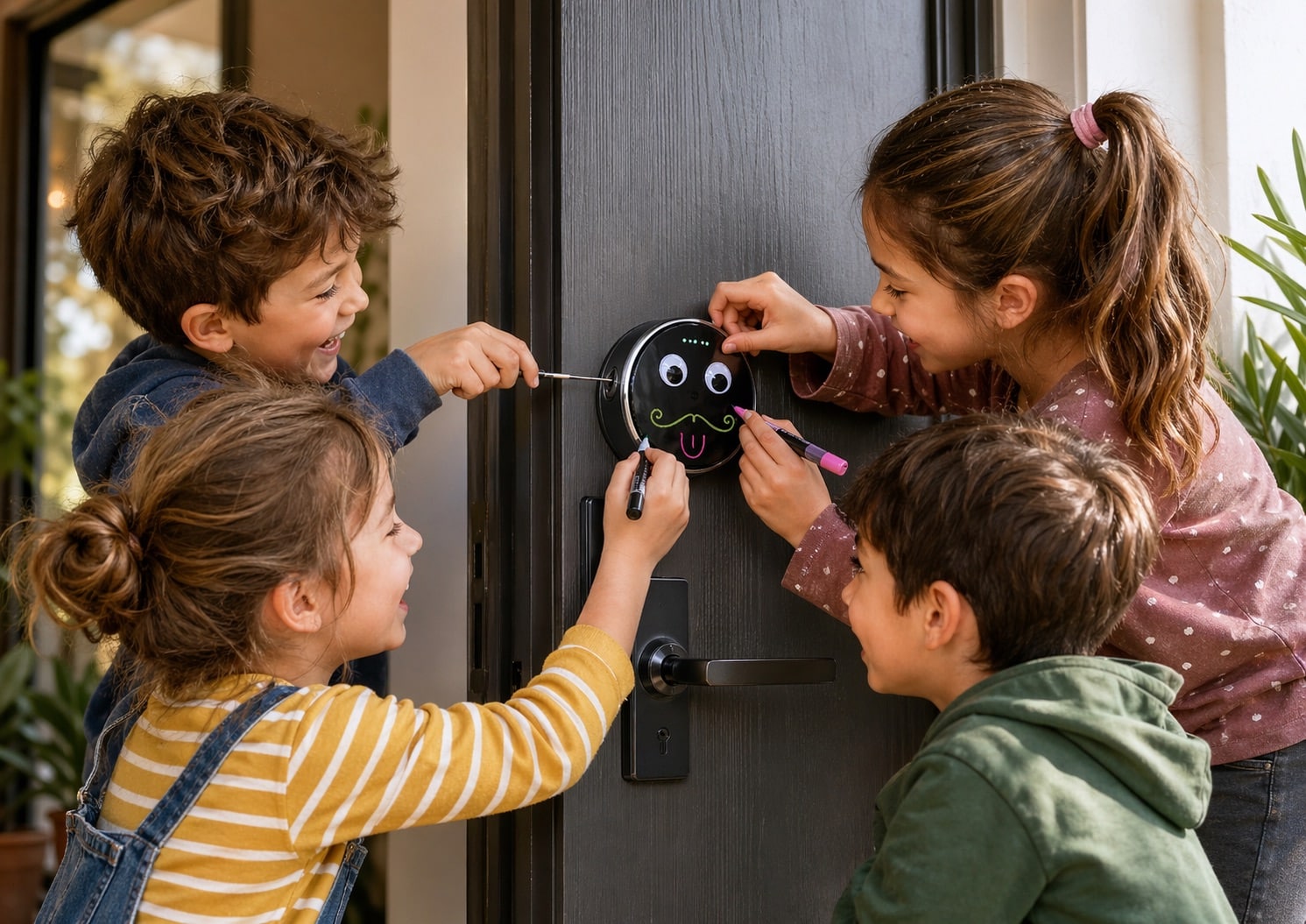
Smart locks with kids
Having a smart lock at home is great—until one of your kids accidentally opens it from the Home app while you're away,…
Ep. 109 · escúchalo
0:00 / 18:41
Hola!
Enhorabuena por la web y tu valor divulgativa sobre domótica. te voy a llevar la contraria en las bombillas domóticas.Tienes toda la razón cuando afirmas que solo sustituir la bombilla es un error de principiante, pero creo que el equilibrio perfecto es sustituir los interruptores y también las bombillas. La instalación seria un interruptor alimentado con normalidad a 220v y la bombilla domótica alimentada fija, sin paso por ningún interruptor. Posteriormente se vinculan con automatizaciones en HA o el sistema que se tenga.
De este modo mantienes operativo el interruptor de la pared pero ademas continuas teniendo la posibilidad de usar las características de una bombilla domótica (atenuación, color, etc)
A mi particularmente me gusta atenuar las luces por la noche y lo he montado de este modo en toda la casa.
Saludos!
Hola Enrique! Muchísimas gracias por tus palabras sobre la web, me alegro de que te resulte útil 🙂
Tienes toda la razón, el enfoque de mantener el interruptor original y usar bombillas inteligentes es técnicamente la solución ideal. Yo también lo tengo así en mi casa porque permite tener lo mejor de ambos mundos… no cambio colores, pero sí la intensidad de la luz según la hora a la que se encienda 😉
Mil gracias de nuevo!
Hola!
Por si sirve de inspiración, yo las bombillas inteligentes las tengo, principalmente, en lámparas de pie o de mesa que se ponen en rincones, detrás del sofá… y cuyo interruptor viene en el propio cable y no suele quedar muy accesible. En estos casos lo que hago es dejar la lámpara siempre «encendida» y que sea la bombilla la que se encienda o apague. Y le suelo vincular un mando zigbee (tipo RODRET del Ikea o los Tuya de 2 duros que hay por Aliexpress) que coloco en lugares más accesibles por si queremos encender la lámpara de manera «manual».
Que a veces pensamos que las bombillas inteligentes van sólo en las lámparas del techo o controladas por los interruptores de pared, y nos olvidamos de la luz indirecta (de hecho, en mi casa rara vez enciendo la luz en las habitaciones, por sensores de presencia y automatizaciones pulidas con el tiempo, el 90% de las veces la luz indirecta es más que suficiente para crear un ambiente confortable sin apenas hacer nada).
¡Y enhorabuena por el blog! He llegado hasta aquí buscando info sobre pinzas eléctricas, que quiero poner una en la casa nueva aprovechando una reforma… y ya me he dado un paseo por medio blog 😀
Hola Parra! Muchísimas gracias por tus palabras! Me alegro mucho de que te haya servido para algo el blog 😀
Sobre las pinzas amperimétricas podemos hablar largo y tendido si quieres, yo utilizo el Shelly EM y la verdad es que funciona de maravilla, le puse una segunda pinza para monitorizar 2 circuitos. Tengo pendiente montar en casa un contactor para que el mismo Shelly sea capaz de bajar uno de los circuitos y volver a armarlo, pero de momento lo tengo ahí en el TO-DO sin fecha prevista 😀
Respecto a las lamparitas, yo hago lo mismo que tú. Tengo botones inteligentes de Philips Hue de esos que son redonditos como una moneda de 2€ y anulados los interruptores físicos de las lamparitas. En casa no utilizamos lámparas de techo salvo en contadas ocasiones, de hecho en el salón ni siquiera las tengo en el techo sino en la pared como un farolillo. La solución del interruptor inteligente me gusta mucho porque permite jugar con la intensidad de las bombillas inteligentes, cambiarlas de color en momentos de pasión xD y cosas así.
Lo dicho, bienvenido y muchísimas gracias!