Forensic analysis of connected cars
 Carlos Sahuquillo
·
29 mayo, 2018
·
4 min de lectura
Carlos Sahuquillo
·
29 mayo, 2018
·
4 min de lectura

For the past few weeks I have been in various events in the car sector And I wanted to tell you one of them that I thought particularly interesting, Automotive CyberSecurity Summit 2018 organized by the SANS Institute Chicago.
In this event they have become some general concerns of the car sector but the most interesting thing has been the American view since They do have autonomous cars running in some cities., so they see the future something closer than we Europeans… they already speak for example of smart cities connected to cars and sharing data in real time about traffic or weather to adapt traffic lights and car browsers, talk about smart self-employed buses capable of going to other lines with higher demand to meet
specific requirements and (this is going to love the electric car owners who suffer the problem every day) talk about standard recharge points capable of identifying the vehicle to then issue the invoice or be able to pay on it with a standard method (named Apple Pay, which we talked about a few months ago) without the owner having to carry hundreds of different cards.
Post-accident or post-crime forensic analysis
Already entering the most technical part, the people of Berla presented a hardware device that connects to CANBUS and infotainment of the car to perform a post-accident or post-crime forensic analysis to know where that car has gone and what actions it has taken. The device is able to collect information from a lot of car and browser sensors and then correct all that information and give a detailed report of the type ‘At 20: 00 has been set up, has gone 14 kilometers to stop at the gas station not even?
No gas has been put in but the door of the escort has been opened and someone has been picked up because the seat has detected the weight change and carried for 10 kilometres until the door of the companion has been reopened. He has been detained for X minutes and then followed the march to point B ‘. It may be very interesting for such cases of use.
What about legal compliance?
The point is, after this talk, I had a lot left. doubts about the storage of data in the car. Do you think it will be?GDPR compliant‘that our car’s browser stores all that unencrypted information? In fact, it’s not just that I store all that information, it’s that if our mobile is connected by Bluetooth the browser generates a copy of our connections that it stores in local, without any protection… and if our mobile is able to connect by
intl / es _ es / auto / «rel =» noopener «target =» _ blank «> Android Auto or Apple CarPlay (i.e. that it is fully integrated with the vehicle for example to read to us the messages that arrive in real time and to be able to answer them with the voice), the system stores a copy of all those messages received and sent… It’s not that cool, is it?
If you think it’s your own car and that access to it is limited, you may sleep a little bit quieter that night… but… What if it’s a rental or rental car you’re going to return? No. There should be a rigid way to encrypt those data so that no forensic analysis could be done or that they could be deleted in a SAFE way when you are no longer using that vehicle.? Well, it’s not like that at the moment…
Same usual attacks
Besides the forensic analysis that I found more innovative, the other technical talks did not surprise too much. People of GRIMM, despite having an environment mounted the sea of painted with several ECU connected, they showed the always known attacks of denial of service (do you remember what a DoS denial of service is? We talked about it some time ago in this entrance.) and injection of men
seages in CANBUS:
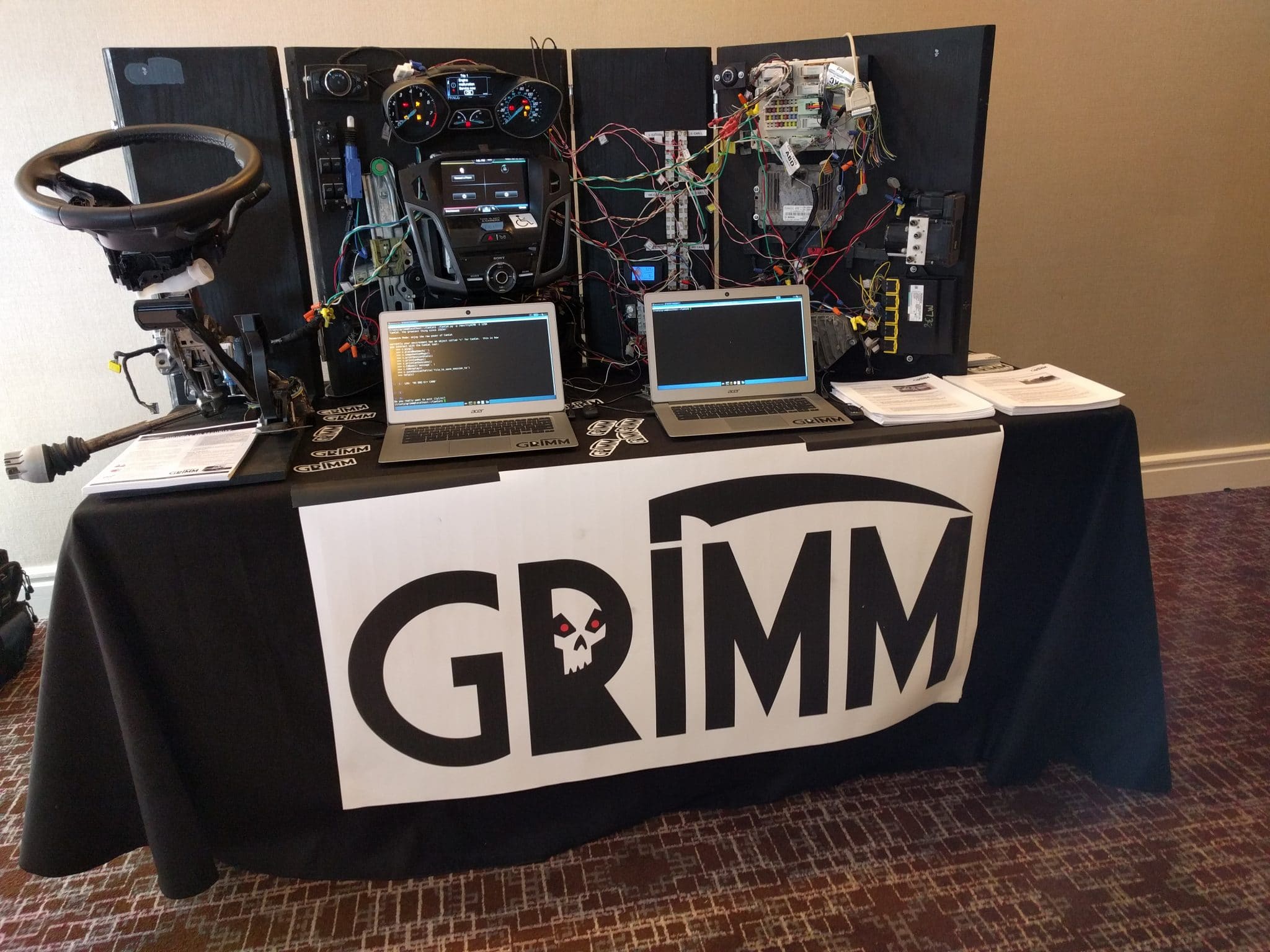
So nothing new under the sun, no new to highlight… I hope in the Black Hat of August in Las Vegas something new will come up, I will tell you because I will also be there;)
Carlos Sahuquillo
'Haga lo que haga en la vida, siempre compito' - Jacques Villeneuve Reserva una sesión →
Entradas relacionadas

Car Hacking
Idioma:CastellanoEnglish For the past few weeks I have been in various events in the car sector And I wanted to tell you…
Leer
Webinar and podcast over Car Hacking
Idioma:CastellanoEnglish For the past few weeks I have been in various events in the car sector And I wanted to tell you…
Leer
First hit by an autonomous car
Idioma:CastellanoEnglish For the past few weeks I have been in various events in the car sector And I wanted to tell you…
Leer
Tendrá sus cosas buenas, no digo que no, pero para mi es una auténtica intromisión en mi privacidad. Dónde voy, cómo voy o con quién voy no es de la incumbencia de nadie, y mucho menos dejar esos datos para su posterior análisis. De hecho, al igual que la GDPR obliga a dar el consentimiento expreso al tratamiento de tus datos, aquí debería figurar una clausula similar, en el cual el navegador no almacene ningún tipo de información ni tampoco ninguna de las tropecientas ECU que lleva el coche (salvo por error o advertencia) sin tu consentimiento expreso. Y no es por tener nada que ocultar, es que considero que es parte de la privacidad a la que tiene derecho cada uno. La tecnología está suponiendo una intromisión en nuestras vidas privadas y la situación, lejos de mejorar, parece que va a peor. Yo seguiré en mi coche viejo hasta que por imperativo legal (o accidente) no pueda circular.
Totalmente de acuerdo, Jose Luis, deberíamos por lo menos tener la opción de borrar/desvincular tu información personal por completo… pero el problema es que actualmente no es así. En los coches de alquiler es especialmente dramático, hace poco alquilé uno y estuvo como 10 minutos intentando conectar por Bluetooth con toooodos los dispositivos móviles que tenía almacenados y vi desfilar varias decenas de dispositivos que el coche reconoce y de los cuales mantiene una copia de la agenda y el registro de actividad… totalmente inaceptable desde el punto de vista del usuario.
Algunos OEMs tienen un disclaimer en el navegador que hay que aceptar para permitir que se almacenen y/o se envíen datos. Pero creedme si os digo que solo aplica a algunos datos, por especificaciones del propio OEM, mientras muchos otros se almacenan en NVM libremente. Y esto no se hace por malicia, sino por desconocimiento del propio fabricante de las implicaciones (muchos aún no están preparados para la GDPR a estas alturas de la película). Hay aún mucha maquinaria que engrasar. Por ejemplo, no creo que en las homologaciones de vehículos se esté tratando este tema, o la tecnología en general, y seguimos atascados en controlar emisiones y poco más (que sabemos que tampoco es que sirva para mucho…)
Totalmente de acuerdo, tocayo, por eso es tan importante la labor de concienciación. Al final son incumplimientos que, aunque no estén directamente relacionados con el mercado del automóvil, pueden acabar en sanciones para los fabricantes, disclosures de datos personales, etc. Las medidas de protección llegarán cuando empiecen a ver las orejas del lobo, igual que pasa en el mundo de los cajeros… hasta que no ha salido una normativa como PCI-DSS con ciertas medidas de Seguridad y Protección para cajeros, los bancos protegían sus cajeros en función de los ataques a los que se enfrentaban en ese país.