What are Bitcoins? Can I get rich mining Bitcoins? (updated as of 12/19/2017)
 Carlos Sahuquillo
·
23 noviembre, 2017
·
9 min de lectura
Carlos Sahuquillo
·
23 noviembre, 2017
·
9 min de lectura

In the post about the Tor network I left talking about Bitcoin and cryptocurrencies in general for another day. This topic came up because cryptocurrencies are the usual form of payment on the dark web since they allow for anonymous payment, but let’s take a look at what Bitcoins and cryptocurrencies in general actually are.
What are cryptocurrencies?
A cryptocurrency is a kind of digital currency for paying for goods and services on the Internet without the need for an intermediary bank.
Okay, fine, and what advantages does this virtual currency have over good old-fashioned money? Well, it has quite a few, but the main one is that they’re anonymous, meaning that a seller can’t know who paid for a service, your name doesn’t appear in the transaction like it does when you pay with your credit card or use mobile payment (which we already talked about) or make a bank transfer… and that’s why they’re used on the dark web or, for example, if your computer gets infected with ransomware and you have to pay a ransom for your files (oh, we don’t know what ransomware is? Well, we’ll cover that in a future post, noting that down). But that’s not the only difference from conventional currencies:
– Decentralized: They’re not controlled by any bank or government.
– International: You don’t need to change currency depending on the country where you make a purchase.
– Secure: No one can ‘seize’ your wallet or freeze your balance.
– Nearly instant transactions: You don’t need to wait for your bank to issue the transfer and have it arrive at its destination; the transaction is validated within a few minutes.
As you probably know, it’s currently governments that determine the value of currencies through the issuance of money, so if they print more money, it becomes worth less relative to other currencies. However, this can’t happen with cryptocurrencies since they have controlled inflation, it’s known from the very first moment how many coins will be in circulation and the rate at which they’ll be generated.
I think I roughly get it now… So what is a Bitcoin?
The first cryptocurrency to emerge was Bitcoin in 2009. Its creator published the algorithm that generates the coins under the pseudonym Satoshi Nakamoto, who at first was thought to be a real person (a very clever one) but was later found not to actually exist, being merely a pseudonym used for the author’s own safety (it’s like finding out your neighbor is the guy in charge of loading the paper roll at the Mint and Stamp Factory and then counting the bills before sending them off to the banks).
How can I get Bitcoins?
There are several ways to get Bitcoin, but the easiest one is going to one of the exchange websites and buying with your legal tender however many Bitcoins you can afford. Easy, right?
But there are more ways to get Bitcoin, you could, for example, sell something or offer some service online and accept payments in Bitcoin, so buyers will give you your first BTC (short for Bitcoin).
And then there’s the cool way, which is ‘mining’. To explain this mining business, we need to dig a bit deeper into cryptocurrencies and the algorithm used to generate them. When you make a Bitcoin transaction, that transaction gets sent to several different points across the network to be validated. If enough of these points confirm the transaction is correct, then it gets approved and the parties involved receive a small reward, a sort of fee for having reviewed the transaction. For example, nowadays when you buy a house you have to go to a notary who reads the purchase contract and certifies it, right? Well, imagine instead sending that contract to hundreds of lawyers to have it validated instead of using a notary… if the first 6 lawyers who respond say the contract is correct, it’s considered ‘validated’ and they get paid a small fee, instead of paying the hefty sum a notary costs and waiting for their availability, since we sent it to hundreds of lawyers and some of them happened to be free, so they reviewed it right then and there. This is basically the blockchain, roughly speaking, and it’s how cryptocurrencies validate transactions. And you might be thinking ‘that’s so easy, I just need to have my computer validate transactions’, and indeed that’s exactly how it works, but as more Bitcoin exists on the network, the algorithm gets more and more complicated and validating transactions becomes harder and harder. When all this started, you could leave your old computer running to mine Bitcoin and earn small fees fairly easily… later on you couldn’t just leave your old computer running anymore, you needed a decently modern computer to validate transactions in time before everyone else… but it kept getting more complicated, so instead of a powerful computer you needed a hefty server… and then with that massive server, you’d be allowed to join a community, so if it was your community that validated the transaction and got rewarded, the Bitcoin would be split among everyone involved… meaning we’re arriving late to the party, as usually happens to me in life.
To give you an idea of how complicated the algorithm is and the computing power required, it’s estimated that the electricity needed worldwide to validate Bitcoin transactions equals 0.13% of global electricity consumption…
And if there’s no Bitcoin bank, where do I keep my hard-earned cash?
To store your cryptocurrencies you need a digital wallet. This wallet has an identification number (a hash) which is what you’ll use to make transactions and what reaches the buyer/seller. Of course, this hash can’t be traced back, nobody can know who’s behind it, not even which country you’re from. This wallet can be generated from Windows, Linux, Mac, your mobile phone, or even generated from one of the few Bitcoin ‘ATMs’ out there.
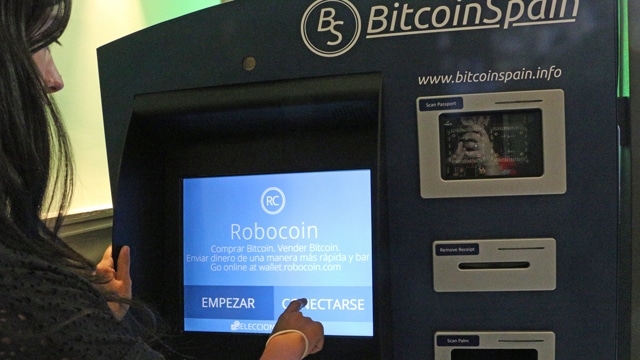
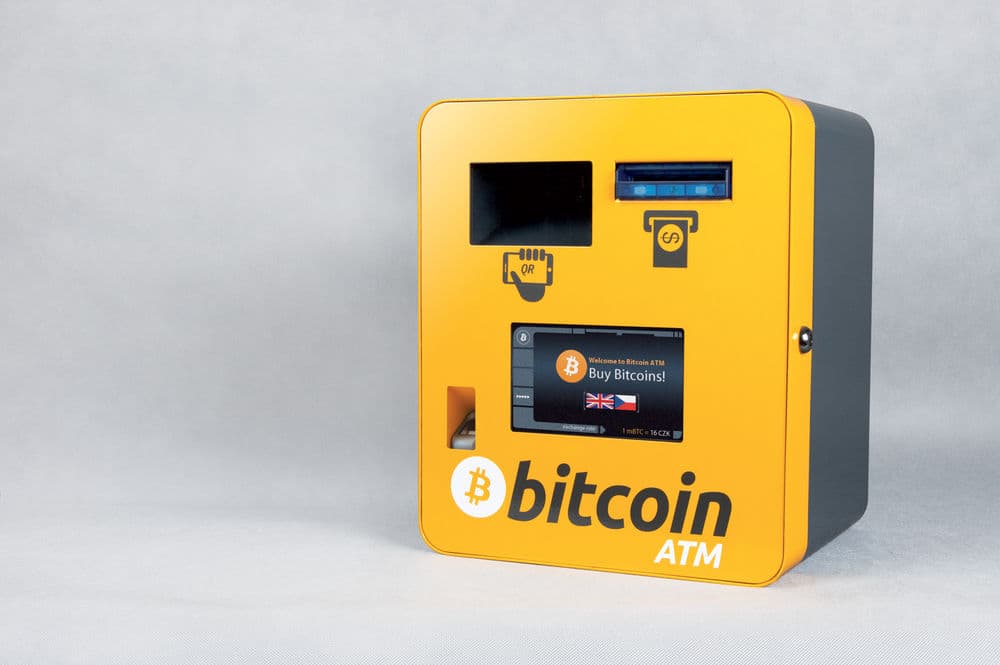
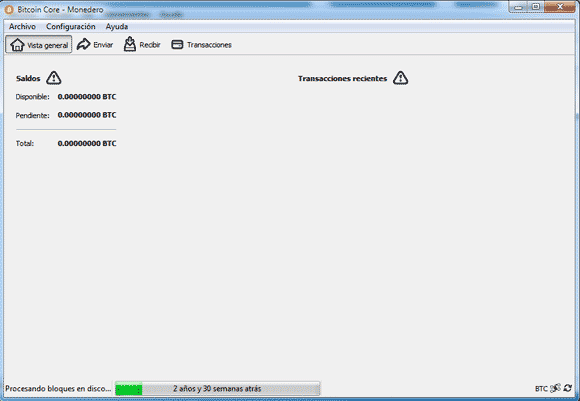
Once the wallet is generated, it will look something like this:
And once I have Bitcoins, what can I do with them? Can I pay on Amazon?
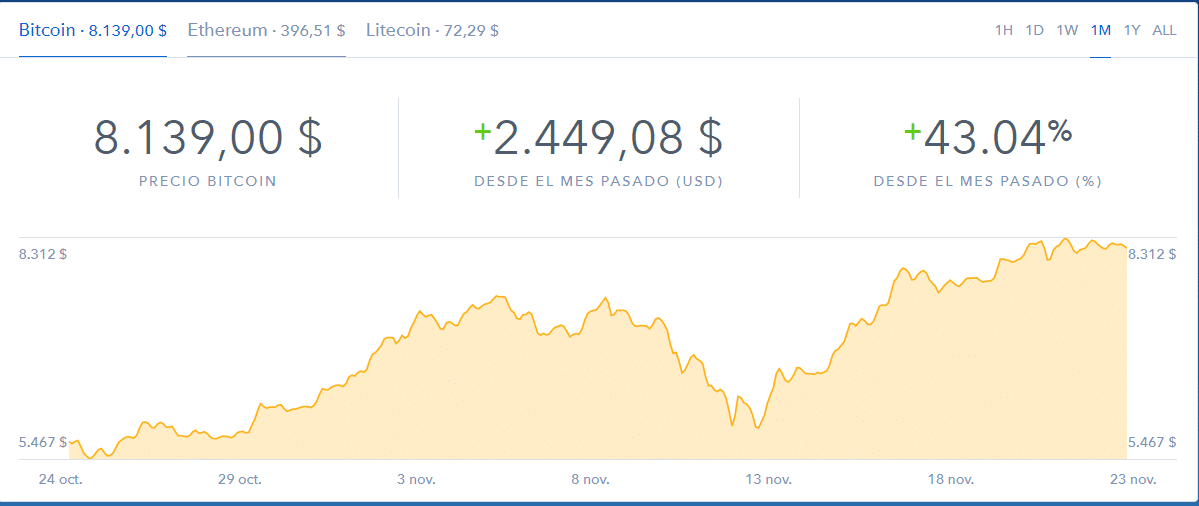
This type of currency is gradually becoming more popular, although there’s still a long way to go before you can pay with them on Amazon, plus it doesn’t make much sense to use an anonymous currency only to then hand over your actual name and shipping address. Even so, there are a few stores on the regular web where you can buy with Bitcoin, for example on Dell’s website to buy a computer, or you can go on vacation by booking a trip on Destinia… but typically people use Bitcoin as an investment. To give you an idea, at the start of 2017 Bitcoin was worth less than €900, while right now it’s worth more than €7,000 €15,000 (as of 11/19/2017). Not only that, but when it launched in 2009 it cost just a few dollars (I bought one to mess around and learn, and it cost me €60… although later a Bitcoin exchange website got hacked and its price dropped to 0… and after a lot of ups and downs, it’s now worth €7,000 €15,000 (as of 11/19/2017), not a bad investment).
I’ve updated the price because since I wrote this post less than a month ago, BTC went as high as €20,000 and has now dropped to €15,000, but that’s still more than double the value it had when I wrote this post… it’s a clear example of the volatility we were talking about.
That’s a bit above my budget… are there cheaper cryptocurrencies out there?
Right now there are lots of cryptocurrencies, although Bitcoin is the most common one. Another one is Ethereum, which people say is the up-and-coming currency that will become more popular than Bitcoin and solves some of the problems Bitcoin has, such as the fact that there’s no maximum number of Ethers in circulation, unlike Bitcoin. There are also other, newer (and cheaper) cryptocurrencies like Bitcoin Cash, Litecoin, ZCash, Monero… here’s the full list with updated prices. For example, Litecoin is currently at $72 $290 (up $220 in a month!), it could be a good price given its track record.
So which one should I buy if I want to get rich?
Unfortunately I have no idea about investing or market trends, so I can’t tell you which one you should buy. When Bitcoin launched and people started buying and mining it, some folks ended up with a huge amount of Bitcoin that’s now worth a whole lot of money… but I’ve also never seen a headline like ‘see this guy with the huge mansion and a Ferrari? He was just as broke as you but bought 100 Bitcoin a few years back’. What does seem to be the case is that some of these currencies are going to increase in value over time… although it’s also true that if some vulnerability were discovered in Bitcoin, for instance, its value would collapse… and as you know if you read this blog regularly, no system is 100% secure. Plus, in a few years we’ll see quantum computers capable of doing today’s operations a gazillion times faster, so Bitcoin’s algorithm will be a piece of cake for these super-computers… maybe by then the currency will go down the drain… we’ll have to make sure to sell our Bitcoin right before that happens.
If you’ve finally made up your mind and want to invest in cryptocurrencies, you can sign up for Coinbase through this referral link so they give you $10 and give me $10 too once you make your first €100 investment… if a bunch of you sign up I’ll consider this post to have been really well worth writing! 😀
Carlos Sahuquillo
'Haga lo que haga en la vida, siempre compito' - Jacques Villeneuve Reserva una sesión →
Entradas relacionadas

Business continuity: Cryptopia exchange is declared bankrupt after hacking
Idioma:CastellanoEnglish In the post about the Tor network I left talking about Bitcoin and cryptocurrencies in general for another day. This topic…
Leer
They steal 7000 BTC from Binance
This time it's been Binance, one of the world's biggest Cyptomonedas. The attackers have taken 7000 Bitcoins using different techniques against the…
Leer
Bitcoin price change
Idioma:CastellanoEnglish In the post about the Tor network I left talking about Bitcoin and cryptocurrencies in general for another day. This topic…
Leer
0 comentarios