Matter and HomeKit
 Carlos Sahuquillo
·
25 enero, 2022
·
13 min de lectura
Carlos Sahuquillo
·
25 enero, 2022
·
13 min de lectura
Idioma:CastellanoEnglish
I probably don’t need to tell you about the mess we’ve got going on today with home-connectivity standards. Alongside the most well-known ones like HomeKit, Alexa, Google or Smart Things, there are dozens of manufacturers with their own devices and apps, in some cases not even integrable with anything, forcing you to use their own app.
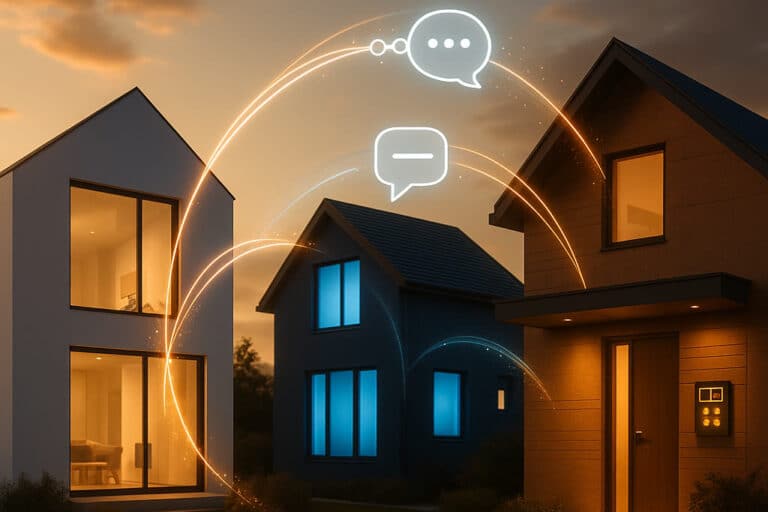
Obviously this works against the user, since this fragmentation makes it complicated to choose the standard that best fits our needs, and we end up wasting time and money on devices that don’t meet our expectations. Because of all this, at the end of 2019 the Connectivity Standards Alliance (CHIP) was renamed Matter, and laid the groundwork for what would become a new open standard common to all manufacturers.
This project obviously includes Apple, Amazon and Google, but also other big names like Samsung or the Zigbee Alliance, not to mention manufacturers like IKEA, Legrand, Schneider Electric, Somfy, etc. In fact, at CES 2022 many devices compatible with Matter and with Thread, the protocol we already talked about a few weeks ago, were showcased.
What is Matter?
Basically, Matter is the new standard for connected-home accessories, smart-home, compatible home automation or whatever you want to call it (I’d love it to be called ‘the new standard for compatible home automation’ because that would give the blog a lot of hype!). Careful though, you shouldn’t confuse ‘standard’ with ‘protocol’. A protocol is Thread, or Bluetooth, or WiFi. Matter sits at the application layer so the user doesn’t have to worry about what’s ‘underneath’, meaning that in principle it won’t matter whether we have ‘older’ smart bulbs connected via Bluetooth or WiFi and some newer ones using Thread directly, since we’ll be able to see them all together and automate actions across them. The main features of the standard are: – Reliability: since it’s supposed to always be available, we’ll see why shortly. – Secure connectivity: since it will negotiate with devices and bridges from different protocols to integrate them all, they’ll update automatically, we won’t be ‘slaves’ to the manufacturer’s app, etc.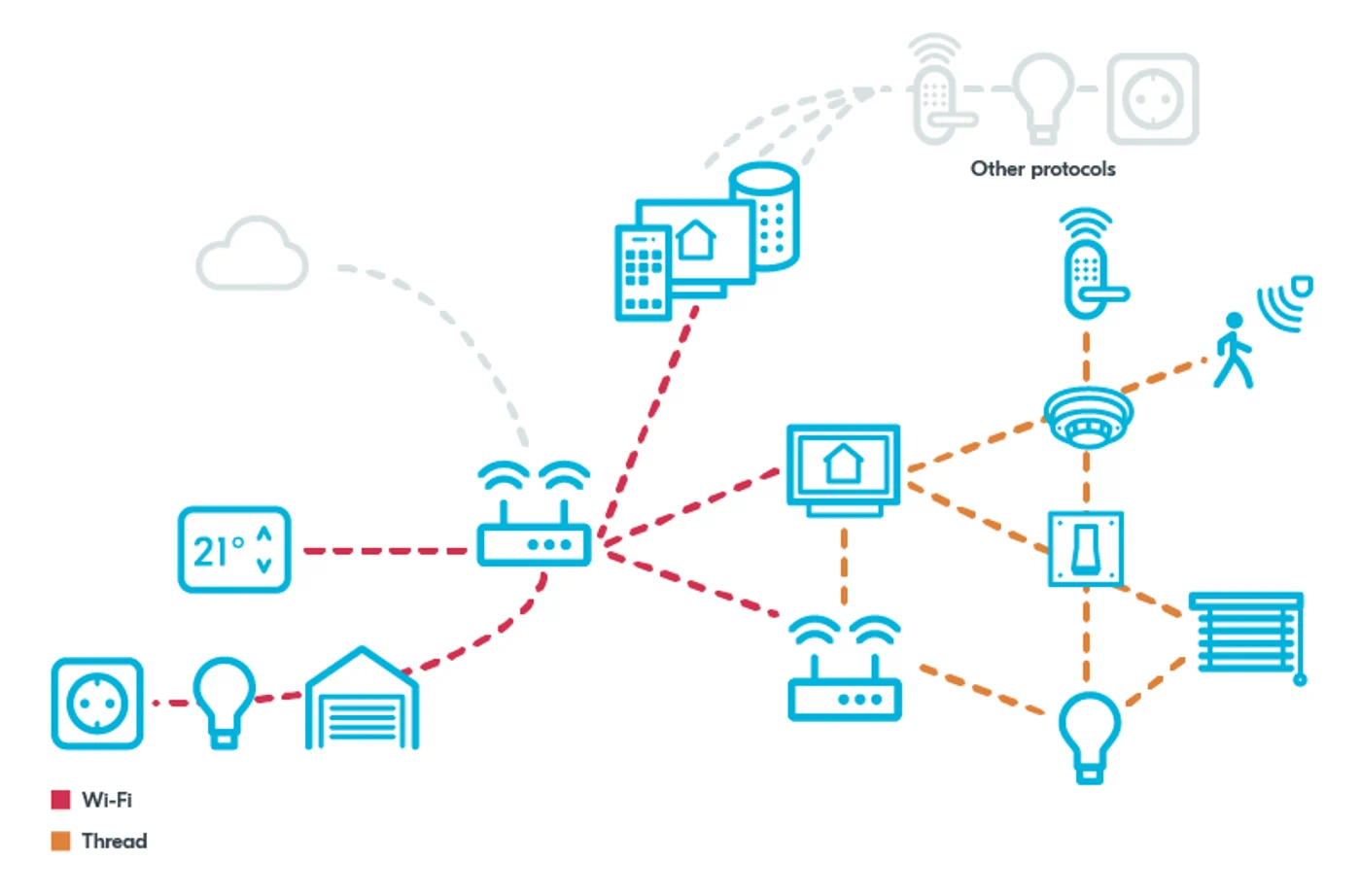
So, what does Matter improve?
As we said at the start, the current state of the art in home automation is very fragmented. Some of the devices we buy are only compatible with one standard… it’s very easy to find a smart plug compatible with Alexa, but if you want that same plug compatible with HomeKit you have to pay more, because the HomeKit standard has specific requirements for communication encryption that require more powerful hardware. We’ve also fought for years with ZigBee devices that need a bridge, and things happen like: even if you buy the latest Aqara bridge certified as ZigBee 3.0, you won’t be able to add other non-Aqara devices to it… even if they’re also ZigBee 3.0!!! It’s like years ago when we had a Windows computer, a Linux computer and a MacOS computer all on the same network — even though all three spoke TCP/IP, there were things that weren’t easy to do, like sharing a folder or a printer on one of them so the other two could access it… and that’s despite TCP/IP having been around for so many years! They use the same protocol but not the same standard. This causes a certain amount of confusion for the user — I myself once bought some really cheap smart bulbs a while back thinking I’d be able to screw them straight into the socket and that’s it… and it turned out they needed a bridge I hadn’t bought, one that wasn’t even compatible with anything besides its own app. Also think about developers who make really good bulbs and want them compatible with the current standards — HomeKit, Alexa and Google — which means they have to build 3 separate integrations for all of them… and then maintain them, of course. Well, in a few months these developers will only need to worry about integrating their great bulbs with a single standard: Matter. In other words, as users we’ll see a much wider range of devices, and those of us who’ve been using HomeKit until now will get to enjoy more brands and options than we currently have available. To identify these devices we’ll still need to check the box like we’ve done until now, but instead of several logos for the compatible standards, only the Matter logo will appear… and we’ll be able to use it from HomeKit with the Home app and Siri, as well as from Amazon’s Echo devices with Alexa, or Google Nest. Oh, and Android has announced it will support Matter this year, and you’ll be able to create automations and run actions directly from the operating system, without needing any manufacturer or third-party app! That’s really cool.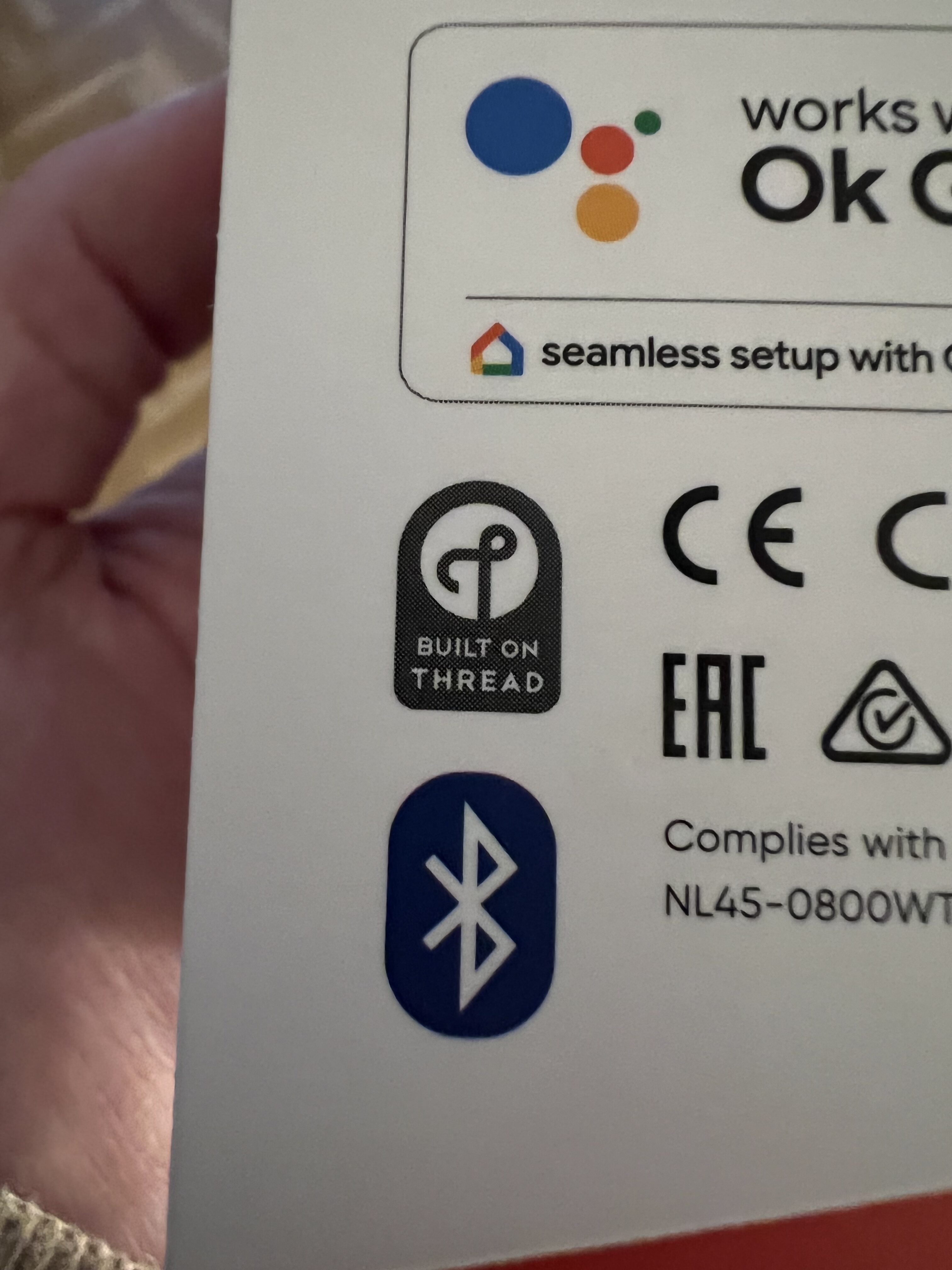
My network with Thread
As we mentioned, Thread combines the best of 2 worlds: On one hand there’s Bluetooth’s low-energy which is great, but if you’re too far from the device… it just won’t work, since Bluetooth has a very short range. And on the other hand, we get Zigbee’s advantages without needing to use a bridge. Once we start using Thread, we’ll have 3 different types of devices… the Border Router, which is the router that connects us to IP services, i.e. wired devices like the TV or WiFi devices like our phone or any other bulb or similar device connected directly via WiFi. This Border Router acts as the ‘accessory hub’, so you can imagine that both the HomePod mini and Apple TV on Apple’s side, Amazon’s Echo devices, or Google Nest (from the second generation onward) are already compatible with Thread. Then we’ll have the Thread Routers, which are powerful, mains-powered devices that create a MESH network of devices. Yes, you read that right, they create a MESH network so that all devices form a kind of mesh, and if one of them goes down or becomes unavailable, the rest stay connected to each other, without depending on any single one. For example, smart plugs, switches, and similar mains-powered devices. And finally there are the End Devices, which are simple devices with no power source beyond a battery, like temperature sensors or door/window open sensors.What’s going to happen with the apps?
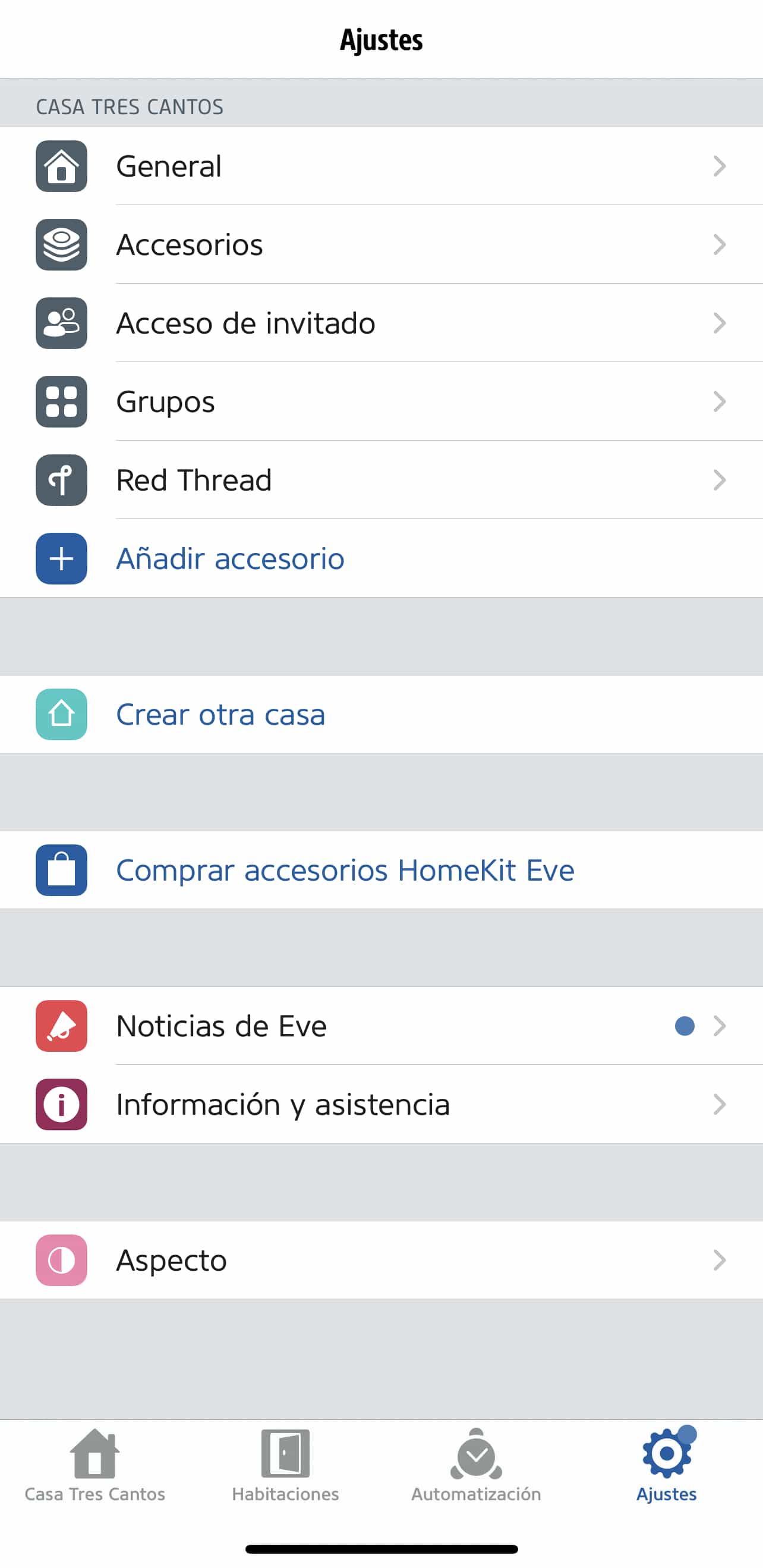
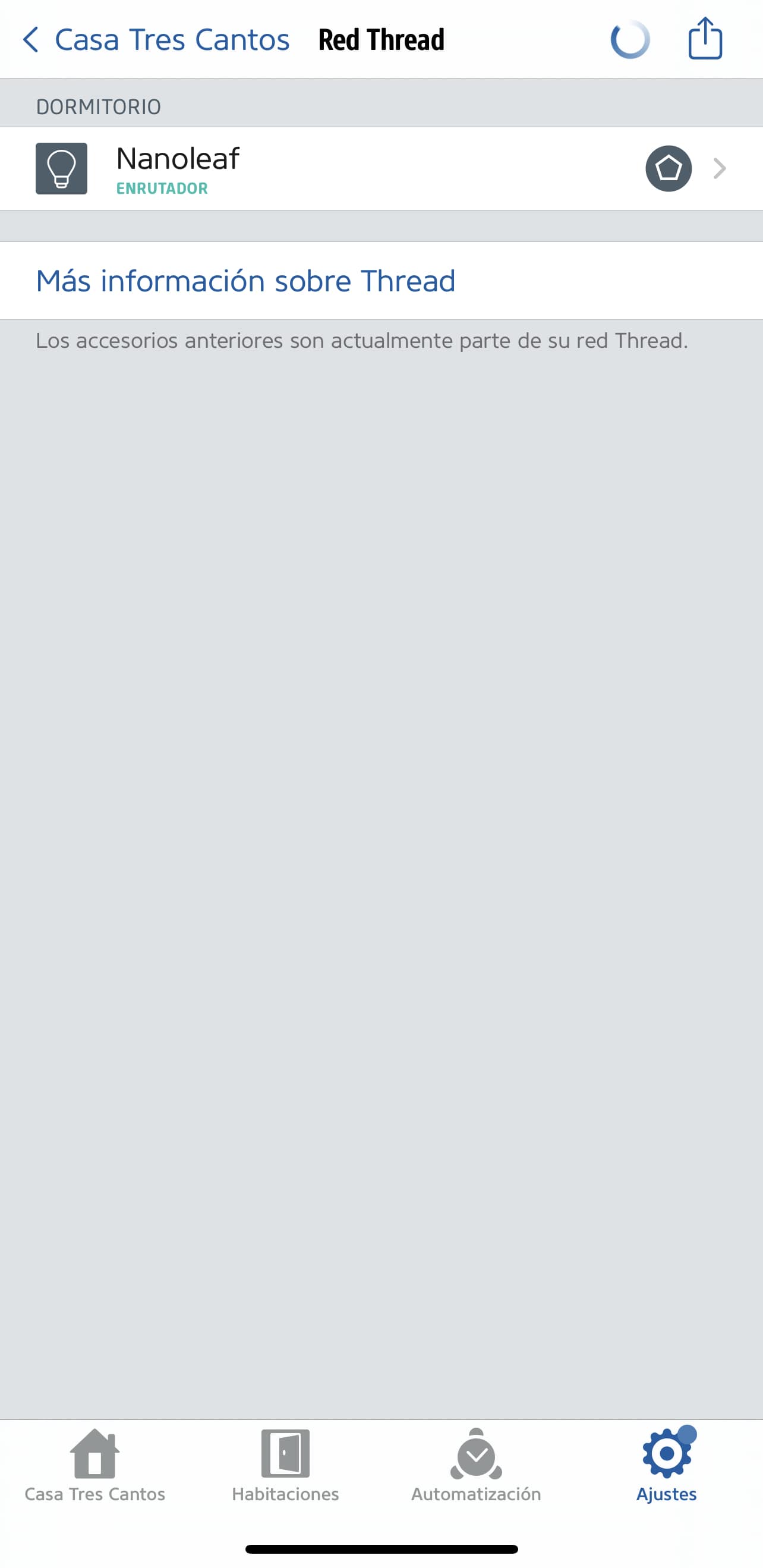
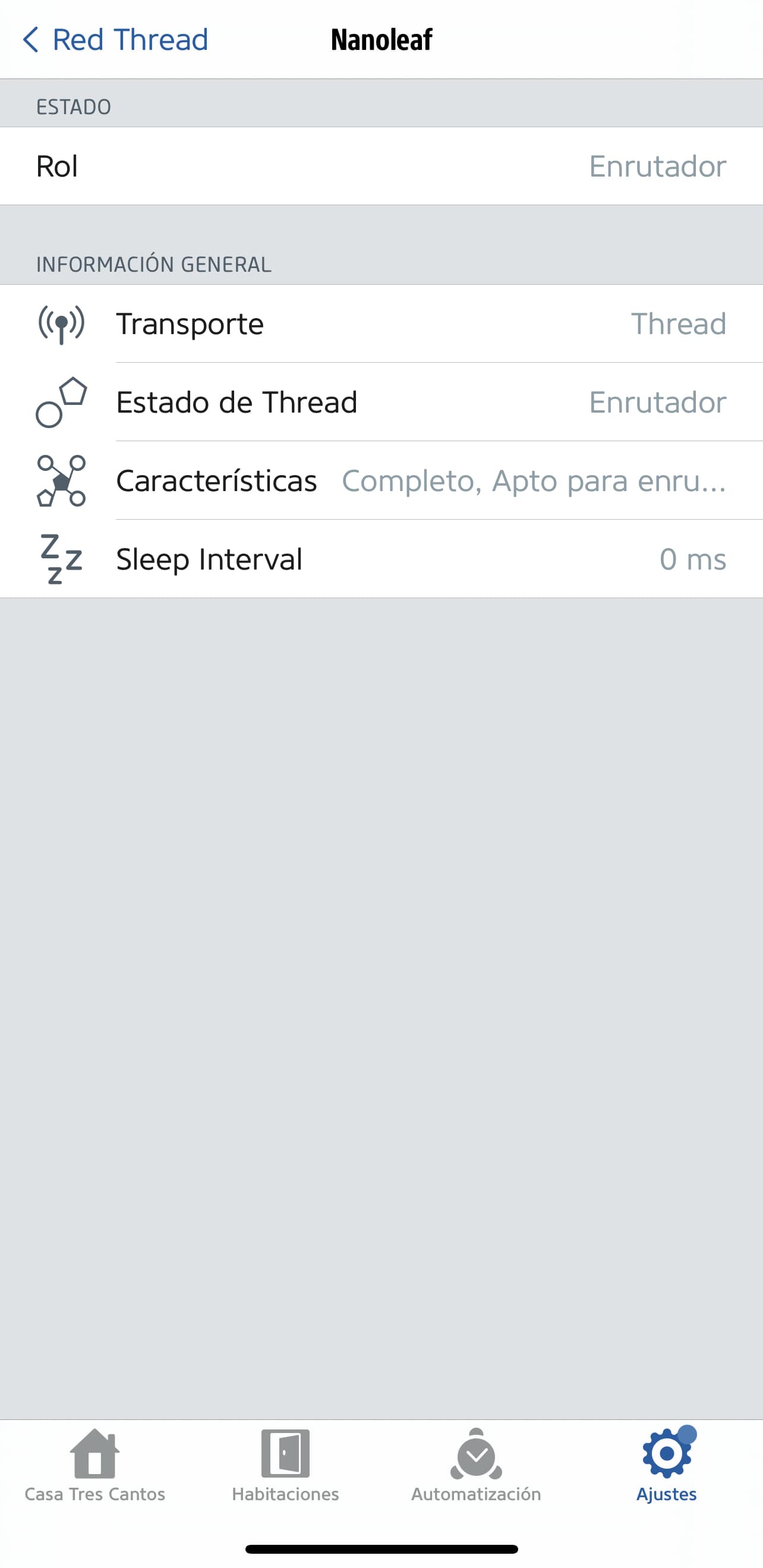
You won’t believe this. I have to bite the bullet and stop using Home+ v5!! And it really bugs me because it’s my favorite app for creating automations — with just a few clicks you can add several complex conditions and specify whether you want all of them to be met or just one, AND/OR style. But right now, neither Home+ nor Home can show the devices we have connected via Thread, since it doesn’t display the protocol… and on top of that, there are devices that don’t show up in Home+ v5 at all, like the TV or the HomePods, which bugs me even more since I have to create automations from Home and Shortcuts, with the limitations of both. So what am I going to use instead? Honestly, no idea, but I’ll tell you now that the folks at Eve were among the first to have Thread-compatible devices, just like the Nanoleaf ones we talked about the other day, so both the Eve app and the Nanoleaf app support Thread and let you see which devices are connected using this technology and which devices use some other ‘outdated’ technology.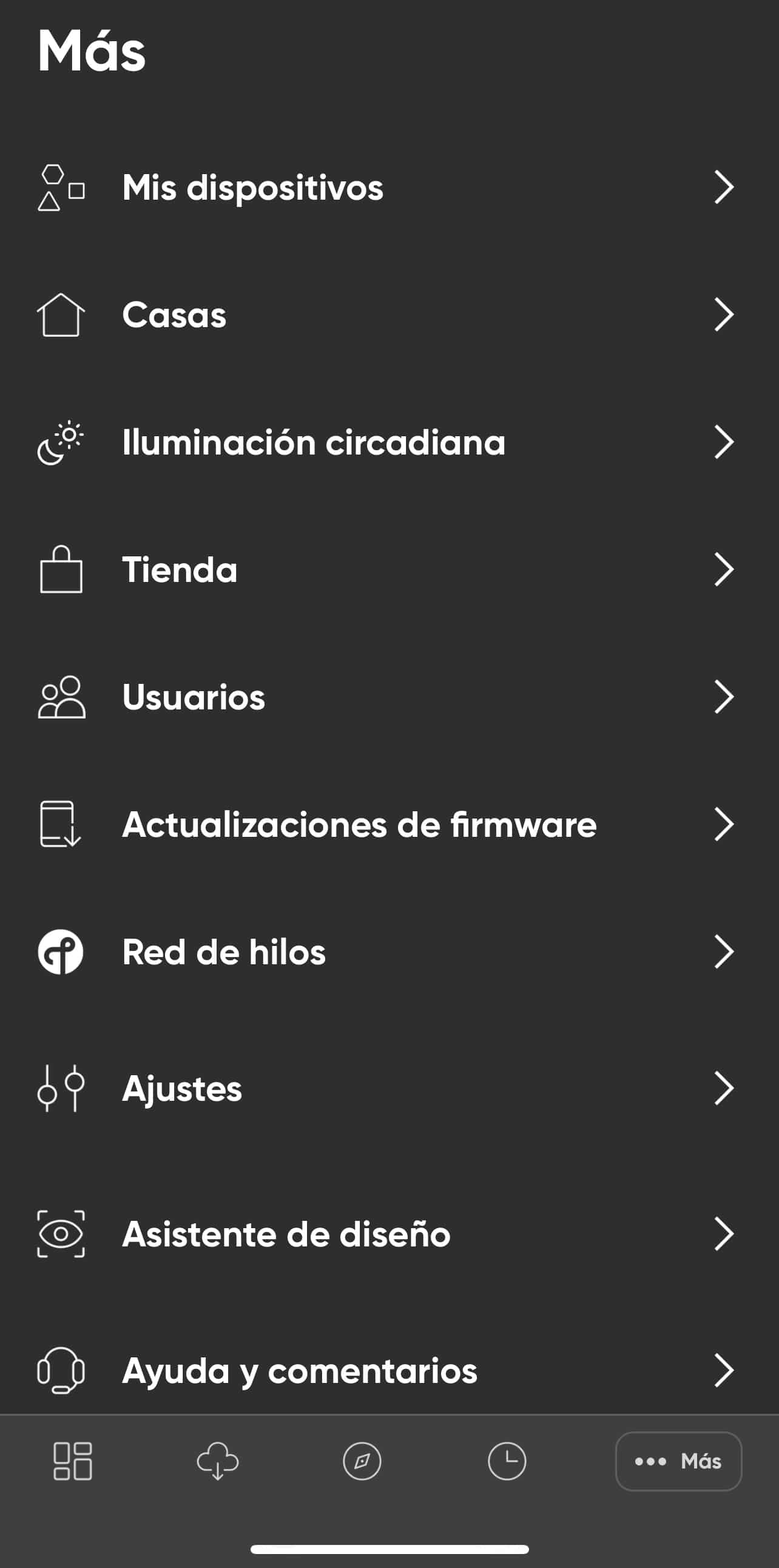

What’s going to happen with my current devices?
Don’t worry, you won’t have to replace your current devices! Thought you’d have to dig into your pocket, huh? Although if you’re reading this, I bet you’ll end up replacing some of them eventually anyway 😀 That said, if the bridge you currently have supports Thread, all the accessories we have connected through that bridge will remain accessible. They won’t turn into Thread devices, meaning they won’t be part of the MESH network created by Thread, and if the bridge goes down we won’t see those devices… but if, say, we have the Aqara bridge, there’ll be no problem keeping the Aqara devices we currently have, although new devices that come out compatible with Matter won’t need the bridge to connect to the network anymore, and if the bridge isn’t available, new Aqara devices compatible with Thread will still be visible on the network. By the way, Aqara has confirmed that during 2022 both the M1S and the M2 will become Thread-compatible (and we’ll finally be done with the hassle of linking them across 2.4 and 5GHz networks!). But what happens if we don’t have a Thread-compatible router? Many users have their ISP’s router at home managing the WiFi. In that case we’ll be able to keep buying devices compatible with HomeKit, Alexa or Google just like now, but until we buy a Thread-compatible Border Router we won’t be able to use devices certified for Matter. It’s only a matter of time before ISP routers get updated to support Thread, just as they were updated to support 5GHz WiFi networks, but I’m afraid it’s going to take a long while before we see this… and then we’ll have to call our ISP and tell them our router broke and we need a new one, since I doubt they’ll swap it out for us just like that on their own initiative… xDWhat about my Shellys?
Shelly hasn’t said anything about this yet — and people are giving them grief about it on Reddit — but personally I think Shelly devices will keep being WiFi devices rather than Thread. It’s likely that the firmware will adapt to Matter and we’ll be able to link it with other devices without needing to flash anything, but what’s certain is that current devices CANNOT be Thread-compatible, basically because they lack the necessary antenna.And this awesome thing… when?
Mid-2022. The date keeps getting pushed back — originally it was supposed to be during the first quarter of 2022, and now they’ve said mid-year… but surely we’ll see the standard released this year.I need to buy a new device… should I wait a few months?
At CES, a ton of devices from many manufacturers were shown off as Matter-compatible. Manufacturers like Arlo, Belkin, Aqara, Tuya and, of course, Philips Hue. What we still don’t know is whether, for example, Philips will update its bridge to support Thread, or whether they’ll simply release a new bridge compatible with both Thread and ZigBee for the bulbs we currently have at home, which will, in a few months, be replaced by bulbs directly compatible with Thread that let us link them to the network without needing the bridge. What I am sure of, after my experience with the Nanoleaf bulb, is that I want to gradually replace my devices so they connect via Thread. I liked the Nanoleaf so much that I want to keep trying out Thread devices, so I’ve even looked at the new Eve switches that support Thread… but the whopping 100 bucks each switch costs made me think twice and cooled off my initial excitement a bit 😀 We’ll see how it goes.¿Necesitas ayuda con tu domótica?
Te ahorro tiempo, dinero y disgustos. Sesiones de consultoría desde 60€.
Carlos Sahuquillo
'Haga lo que haga en la vida, siempre compito' - Jacques Villeneuve Reserva una sesión →
Sigue leyendo
Ver todo el blog
Entradas relacionadas
17 septiembre, 2026 · Domótica
Leer
HomeKit with AI in iOS 27
Apple released iOS 27 on September 14th and, as every year, I'm going through what's changing in the Home app and HomeKit.…
Ep. 112 · escúchalo
0:00 / 12:44
3 septiembre, 2026 · Domótica
Leer
Webhooks and workflows in Controller for HomeKit
Kicking off Season 4. I'm picking back up the automation for the sensor that kept running out of batteries that I told…
Ep. 111 · escúchalo
0:00 / 13:12

27 agosto, 2026 · Domótica
Leer
How to tell if your kid is sneaking into your room without having a camera
I bought the Aqara P2 presence and light sensor with Matter, and I've got it running simultaneously on HomeKit and Home Assistant…
Ep. 110 · escúchalo
0:00 / 12:16
0 comentarios